
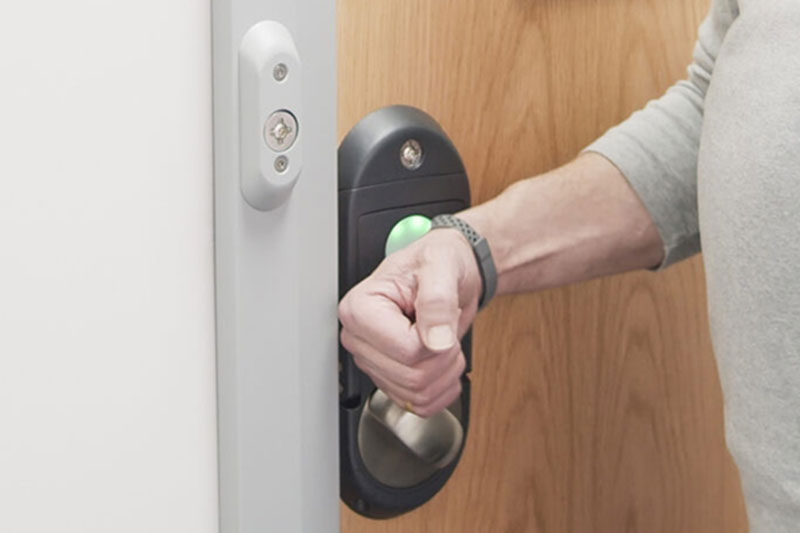
In mental health, we talk a lot about risk and compliance. But some of the most profound harm comes from losing life’s smallest freedoms.
And for staff, carrying that power imbalance takes its own toll.
Something as ordinary as a door can shape the culture of a ward more than we realise.
This article explores how these dynamics form, how they escalate, and how independent electronic patient locking can help restore dignity, privacy, and a sense of control.
The Emotional Disconnect: When Everyday Life Stops Feeling Like Life
Across the country, most inpatient bedrooms still rely on mechanical locks often falling short of CQC-referenced guidance. The intention is safety. The outcome is something far more complex.
With staff holding the keys and patients often only able to lock their door from the inside, typically when they want to enter the room, they wait. If they want to get back in after an activity or visit to the bathroom, they wait again. If staff are tied up with clinical tasks, admin or incidents, they wait even longer.
With mechanical systems:
- Patients can only lock their door from the inside.
- They cannot enter their room independently from the corridor.
- Trusts often do not issue keys due to concerns around self-harm and weaponisation risks.
- All of this contributes to a loss of autonomy which diminishes confidence, and when confidence falls, recovery feels further away.
This loss is subtle, but it is everywhere. A person who cannot lock or unlock their bedroom on their own often describes:
- Feeling exposed
- Feeling unable to retreat when overwhelmed
- Feeling dependent in a way that erodes dignity
- Feeling powerless
And when people feel powerless, the ward culture shifts. Anxiety rises. Suspicion grows. A missing item becomes a flashpoint. A delayed room check becomes a personal slight.
Lingering beneath it all is the belief that life on the ward is done to you, not with you.
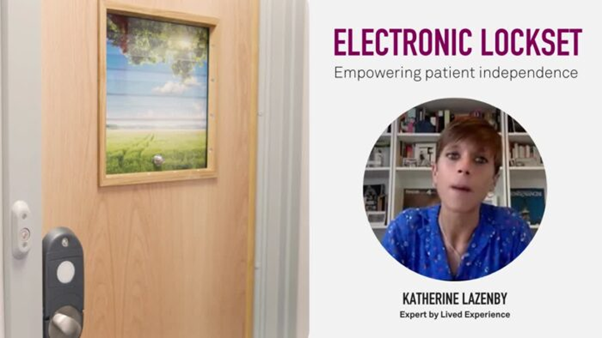
“If there’s someone else locking you in, or letting you out the experience is one of disempowerment and disconnection”
The Strain on Staff: When Every Door Becomes an Intervention
Mechanical locks don’t just limit patients. They change the rhythm of the clinical flow.
A single request to unlock a door takes seconds.
Forty requests in a shift is something else entirely.
Each one interrupts a nurse during an observation round, or a medication check, or a de-escalation. Each one adds a point of friction. And each one forces staff into a role they never wanted: gatekeeper.
Nobody joins mental health care to police access to rooms. Yet the system creates this dynamic by default. Over time, these interactions can often:
- Wear down emotional energy
- Introduce unnecessary flashpoints
- Increase the perception of power imbalance
- Reduce time for therapeutic work
Staff often describe the frustration of having to mediate flashpoints that could have been avoided entirely if individuals had control of their own space. The result is a ward culture with more interruptions, more conflict, and less time for care.
And all of this stems from something as mundane as a lock.
Staff feel torn between clinical responsibilities and constant requests to unlock doors. Patients feel dependent and exposed. These mismatched pressures slowly erode trust and strain therapeutic relationships.
It only takes a few days for the emotional weight of door access to become part of the ward’s fabric.
The Real Question: What Does “Good” Look Like?
Both CQC guidance and the Safewards model point towards similar principles of what good should look like. In reality many wards fall short.
The CQC has made its expectations clear:
“patients should be able to lock their rooms when they are in the room and on leaving it.”
Taken from CQC’s Brief guide: Shared sleeping arrangements on mental health wards, which draws on Health Building Note 03-015.
The SafeWards model also urges services to remove environmental triggers that escalate distress. Door access is one of those triggers.
And with one NHS trust publicly reporting more than 6,000 violence- or aggression-related incidents in a single month. It’s clear that these flash points are a real and daily challenge experienced by everyone on the ward.
That’s why getting closer to what good looks like can have transformational impact on patients and staff alike, for patients gaining free access to their own space:
- They feel safer and less exposed
- They feel respected
- They feel more normal
- They re-establish the rhythm of private life
- And when staff no longer spend hours managing access:
- The ward becomes calmer
- Relationships soften
- Clinical teams can focus on care
- Stress levels fall
The impact is not abstract. It is felt in the atmosphere of the corridor. In the pace of the day. In the trust between people.
Why Electronic Locksets Are the Key to Patient Autonomy Without Compromising Safety
What changes when the door works for everyone?
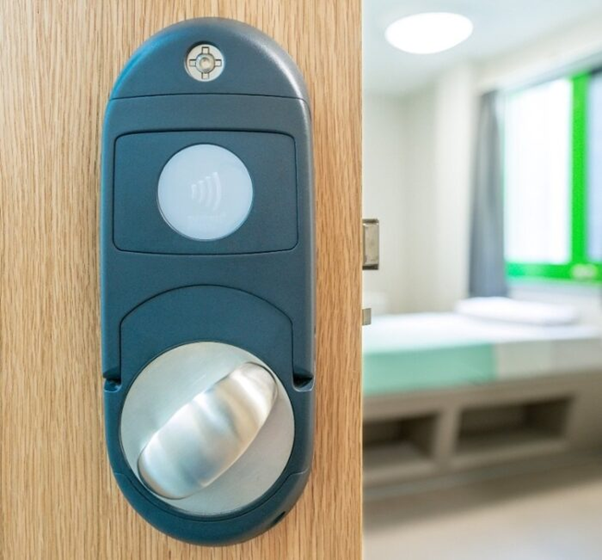
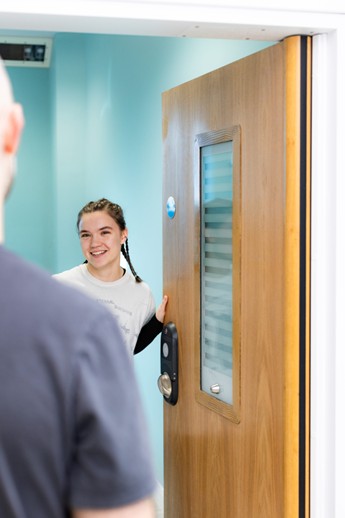
When electronic locking is introduced, with a built-in mechanical override, the dynamic shifts instantly. This ensures patients gain all the benefits of free access to their own space without introducing personal safety risks and ensuring staff retain reliable anti-barricade access themselves.
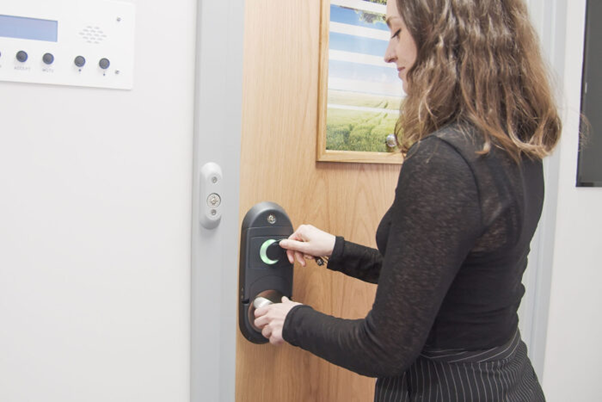
At Silverwood, Surrey and Borders Partnership NHS Foundation Trust installed electronic locksets on all bedrooms, integrated with their Paxton access system. Patients use a secure wristband to lock and unlock their own door, with staff retaining emergency access through the same system and with the staff-only Lifeline key.
The outcome: Reported greater autonomy for patients and streamlined access for staff.
Similarly, at Nightingale Hospital in London, electronic locking was part of a wider co-design project. Staff reported gaining back significant time each day, while patients felt more in control and less exposed.
Hospital Director Marc Sycamore describes it very simply:
“One thing that we have really enjoyed is your electronic fob system, because it gives the patients the independence, and it also gives the staff the time back.
The outcome: Reported a renewed sense of self for patients and support for staff to spend more time providing care.
In both examples, electronic locking shifted a source of friction into a source of calm. What changes when the door works for everyone.
What This Means for Recovery: The Human Story Behind a Simple Door
Good mental health environments are shaped by how people feel as they move through their day, not just by compliance checklists or ligature reduction scores.
When someone is in crisis, the smallest moments carry weight. They need ways to regain control, to step back when overwhelmed, and to feel even a flicker of normality in a place that often feels anything but.
Staff, too, need fewer flashpoints so they can focus on care rather than constant de-escalations and interventions.
You see the difference when someone can open or close their own door. It creates a quiet shift.
- A person returning from a difficult therapy session can retreat into privacy without depending on anyone else.
- A nurse can complete a medication round without a queue forming for room access.
- Someone who once feared their belongings might be moved now feels protected in their personal space.
And when staff need to reach a distressed patient, they can do so quickly and safely.
These small shifts add up. The ward feels calmer. People feel respected. The atmosphere softens. Autonomy becomes part of the therapeutic fabric, not an afterthought.
A Small, Low-Cost Change with Huge Human Impact
Many assume such a shift requires major capital works, weeks or even months of disruption and costly re-housing.
But retrofit electronic locksets avoid this altogether. They:
- Install cleanly
- Require no decants
- Integrate with existing Paxton or Salto systems
- Cost a fraction of full doorset replacements
- Agency is a core therapeutic need and with low capital input the positive human impact can be immense.
This is what designing for good looks like. A small shift in hardware that transforms the emotional ecosystem of a ward.
Made for Living
At Safehinge Primera, we believe safety and dignity should never be at odds.
Electronic locksets are one example of how design can soften the hardest moments of someone’s life, simply by giving back what crisis often takes away: independence, privacy, and the reassurance of personal space.
Made for Living is about the human-centred design that supports therapeutic environments without compromising safety.
And sometimes, healing begins with something as simple as a lock that lets you be yourself again.
Read more about how together we design for good in our made for living series.


