

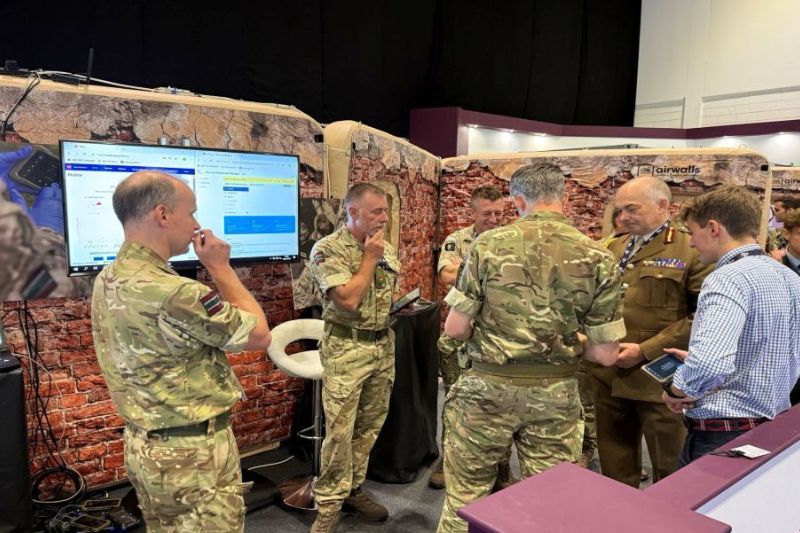
The UK’s Defence Medical Services (DMS) has awarded a £2.5m contract to the Leeds‑based digital health technology consultancy Avenue3.
The contract is to develop an innovative health records system that will support clinicians treating troops anywhere in the world.
“Project Mercury is a real game changer and will help military clinicians provide effective and accurate care to deployed personnel no matter where in the world they are serving,” said Lt Col Michael Claydon, Clinical Lead for Project Mercury at the Defence Medical Services.
The contract funds the next phase of Project Mercury, a secure digital platform designed to give military medics real‑time access to deployed personnel’s medical information, even in remote and connectivity-limited environments.
The DMS has said that Project Mercury was launched to solve the issue of clinicians experiencing limited access to patients’ medical records while on operations.
They often have to rely on paper documentation or disconnected systems.
By allowing clinicians to view, update and share medical records securely across multiple devices, the new platform will support faster, safer clinical decision‑making in the field.
What makes Project Mercury unique?
A standout feature of Project Mercury is its use of Near Field Communication (NFC) technology, which is the underlying method used for contactless payments.
NFC allows information to be transferred offline between devices, ensuring that patient data can be recorded and accessed even without internet access and synchronised later when networks become available.
This breakthrough brings military medical records into a modern era of resilience and adaptability, allowing clinicians to deliver care with confidence regardless of operational conditions.
The new contract marks a pivotal transition from the project’s initial development stage into full‑scale implementation.
The first live release of Project Mercury is planned for spring 2026, with further development and phased national rollout continuing through 2027.
Working closely with UK and NATO clinicians, commanders, and technical teams, the system’s design is rooted in real operational experience.
Project Mercury forms part of a broader effort, led by Programme Cortisone in collaboration with Defence Digital, to replace outdated, siloed systems with a secure, modern healthcare information ecosystem for the armed forces.
Supporting SME innovation
The contract also reflects the UK government’s wider Defence Industrial Strategy 2025, which invests £250m into supporting small and medium‑sized enterprises (SMEs) in defence procurement.
Partnering with a specialist UK‑based digital health consultancy demonstrates the Ministry of Defence’s commitment to fostering innovative domestic suppliers that can deliver high‑impact technology solutions.


