
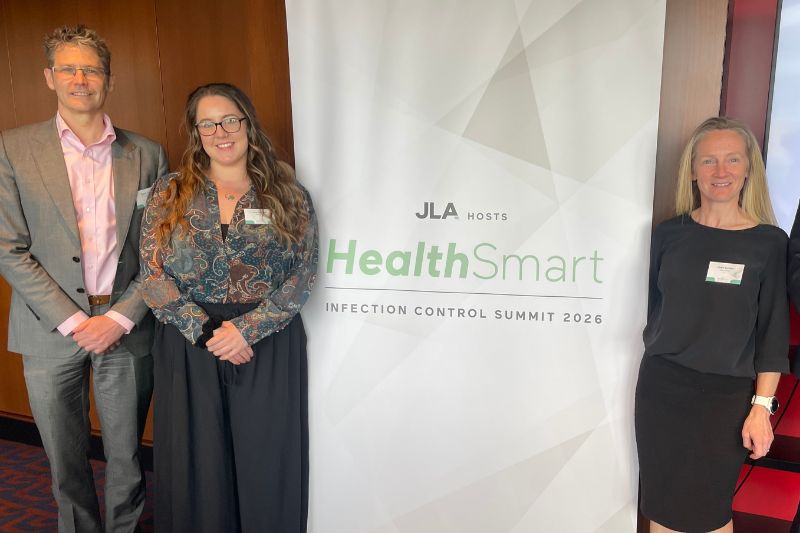
New research into microbial survival on healthcare textiles, alongside discussions around NHS laundry infrastructure, sustainability and digital monitoring systems, formed the focus of this year’s HealthSmart Infection Control Summit.
Hosted by JLA and held at The Standard in London, the event brought together NHS and industry leaders to examine the role of laundry systems in infection control across healthcare environments.
Understanding microbial survival in healthcare laundering
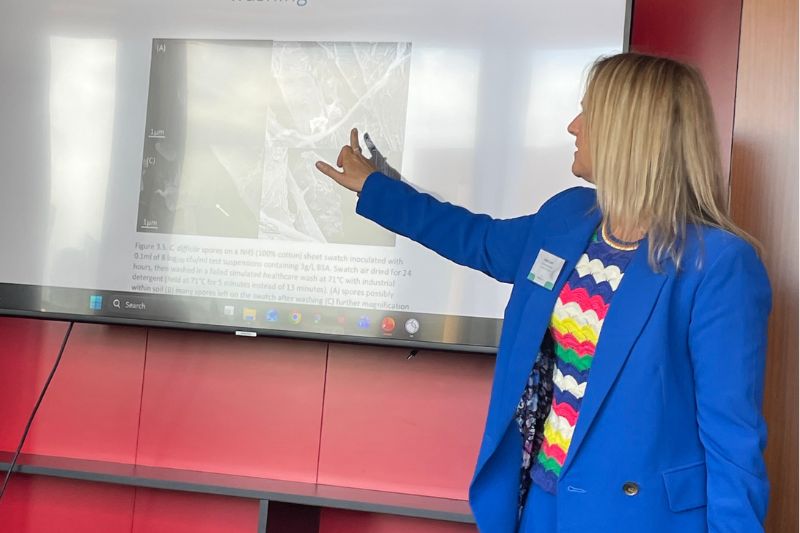
Opening the event, Katie Laird, Professor of Microbiology at De Montfort University, presented research into microbial survival on healthcare textiles, including Clostridioides difficile spores.
“They can survive for years,” she said, adding that C. difficile spores were “not affected by temperature”.
Research presented during the session found spores remained present after high-temperature wash processes.
“When you just use temperature alone, they are just washing around in the machine,” said Laird.
The research also examined contamination transfer between textiles during industrial laundry processes.
“Anyone who says we don’t have a spore problem in an industrial laundry setting is not telling the truth,” Laird told attendees.
Laird highlighted concerns around domestic laundering of healthcare uniforms, with testing across six domestic washing machines finding some failed to reach or maintain temperatures needed for antimicrobial reduction.
Recently published research from Laird and her colleagues had also identified antibiotic resistant genes within domestic washing machines, alongside evidence that microorganisms could survive and transfer between textiles and surfaces during laundering.
The discussion prompted debate among NHS attendees around the cost and operational barriers linked to moving away from domestic laundering.
One NHS delegate said: It isn’t that we can’t achieve it, it’s the will and the cost.
NHS laundry processes and reusable textiles
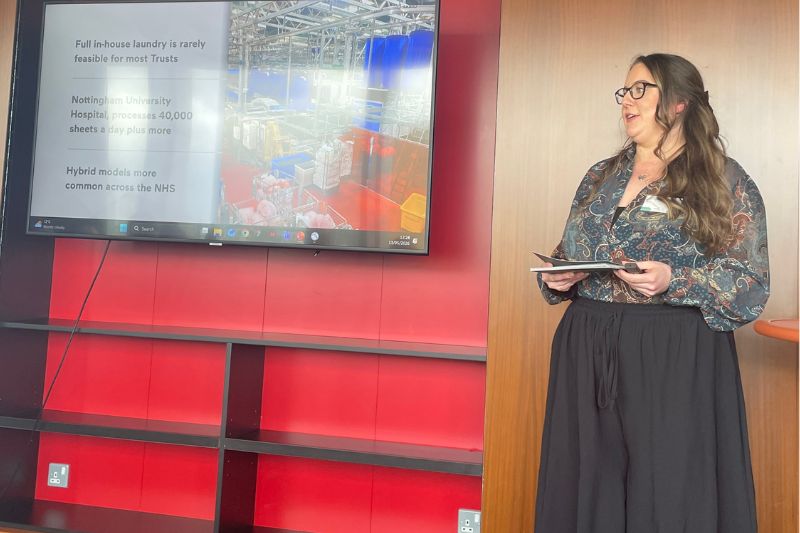
The second session, led by Lucy Cripwell, R&D Chemist at JLA, examined how infection control science is translated into everyday healthcare laundry operations, from compliance to the growing use of reusable textiles.
“Laundry directly influences patient safety, environmental impact, and costs,” said Cripwell.
Figures presented during the session showed 55,000 tonnes of medical textiles are incinerated annually in the UK.
Meanwhile, reusable surgical gowns could reduce solid waste generation by up to 84%.
“Only 30% of NHS estates currently use reusable gowns, which represents a significant opportunity for progress,” she said.
What is HTM 01-04?
Cripwell also examined compliance requirements under NHS England’s HTM 01-04 guidance covering healthcare textile handling and disinfection.
“The system design matters as much as the chemistry in operation,” she said.
She added that compliant laundry systems depended on factors including linen classification, separation of dirty-to-clean workflows and validated disinfection systems.
There are also differences in compliance standards across Europe, with some countries phasing out domestic laundering of healthcare uniforms, while it remains in use in the UK.
One attendee from the Care Quality Commission said: “There is a lot of guidance out there, and to incorporate this into ways that care homes, for example, operate is complicated.”
Sustainability and procurement challenges
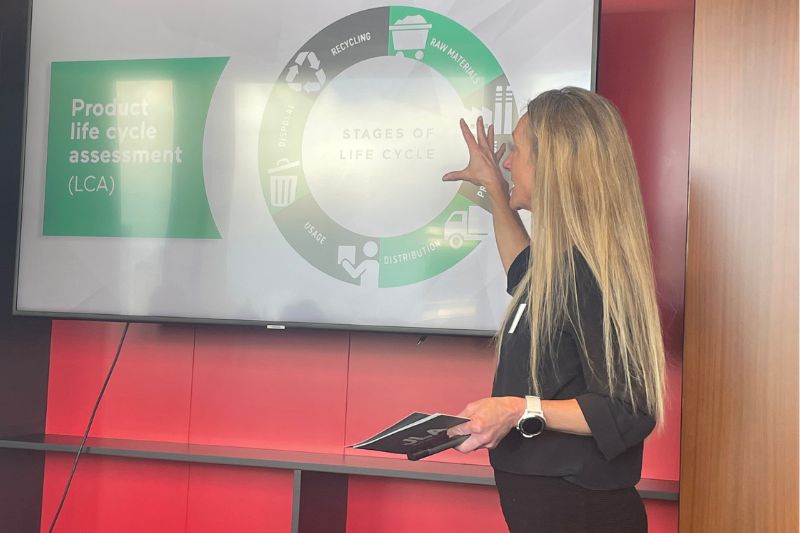
Helen Buchan, Infection Control Expert at JLA, discussed the challenges associated with measuring carbon emissions across healthcare supply chains.
“I see tenders from the NHS asking questions, and I don’t know how procurement managers in the NHS are benchmarking because there is just no standardisation that exists,” said Buchan.
She explored lifecycle reporting, like LCAs, and Environmental Product Declarations (EPDs), which are used to measure and verify the environmental impact of products across their lifecycle.
However, Buchan said there remained major gaps in standardisation for commercial laundry equipment.
“Environmental declarations exist, but not third-party verified environmental declarations,” she said. “If you see one that exists, send it my way.”
According to Buchan, 42% of the NHS carbon footprint comes from the medical supply chain.
She outlined plans for retrofit solutions designed to extend the operational life of laundry equipment, and touched on concerns around microfibre pollution from industrial laundry systems.
“The industry may not know enough about each other’s processes, we need to work together,” a former UCLA and NHS employee said during the session.
The role of technology in monitoring laundry systems
The final session of the summit focused on connected equipment and digital monitoring systems within healthcare laundry operations.
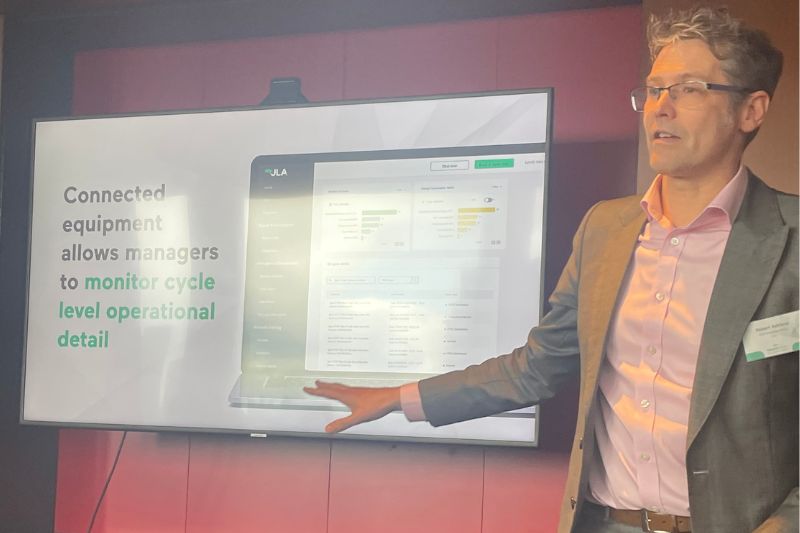
Robert Ackland, Chief Technology Officer at JLA, said approximately 20,000 connected machines are currently monitored across sectors, including hospitals, care homes and prisons.
Laundry is a people-centric process.
“You could have the best processes and the best technology, but it’s the people who do it themselves that can also have the most impact.”
Ackland said connected systems could monitor more than 40 performance parameters, including cycle activity, energy and water consumption, and carbon emissions.
The session also explored cybersecurity risks linked to connected healthcare infrastructure.
“NHS is a huge target for cyberattacks,” Ackland said. “You don’t want the laundry data to be the way they got in.”
Attendees additionally discussed the limitations of technology in reducing operational errors, where failed wash cycles still relied on manual intervention and staff oversight.
Ackland said more manufacturers were beginning to integrate digital monitoring systems directly into machines, although this still needed to be delivered in a cost-effective way.
He added that AI and machine learning would play a growing role in connected laundry systems, saying: “AI will be the next frontier, we’ve got some big plans there.”
What lies ahead for healthcare laundry and infection control?
The summit echoed growing calls for NHS leaders, estates teams and infection prevention specialists to reassess the role laundry processes play in infection transmission across healthcare environments.
The discussion left a lingering question among attendees over why healthcare laundry systems are not held to the same level of compliance monitoring and measurable operational standards as other medical infrastructure and equipment.
And more importantly, what that gap could mean for the future of infection control in healthcare environments.


