
2026 has seen record highs of cancer diagnoses in the UK. While researchers and healthcare providers continue to make significant progress in providing treatment, more can be done to elevate the environments in which this care and treatment are delivered.
In the healthcare property space, there is a growing opportunity to equip cancer care providers with the design expertise needed to create thoughtfully designed, architecturally excellent spaces that go beyond clinical function to offer comfort and reassurance.
Key voices within healthcare are starting to recognise the restorative power of great architecture, and are choosing to play their part in improving the lives of the 400,000 people diagnosed with cancer each year.
Here, Lee and Chandler illustrate the positive impact of good design which is exemplified by the 27 Maggie’s care centres across the UK. These facilities offer free cancer support within buildings which are a world away from traditional healthcare spaces. The two believe that by prioritising human-centred design, these environments can become a true home away from home for patients, friends and families navigating the realities of a cancer diagnosis.
Working in collaboration with Sir Robert McAlpine, contractor on ten of Maggie’s architecturally ambitious projects, Maggie’s centre visitors have benefitted hugely from a professional relationship nurtured over the course of fifteen years. This close collaboration has seen them placing patient needs at the heart of every construction and design decision made from pre-start planning meetings and early-stage trials to completion.
Over this time, the Sir Robert McAlpine team have learnt the best ways to stay true to this mission, guided by Maggie’s strong vision. With this experience comes knowledge of what works, and by default, what doesn’t.
These facilities push the boundaries of healthcare design, but is the impact enough to inspire change on a wider scale? Are healthcare providers doing enough to prioritise patient experience? And more importantly, what changes do other healthcare providers need to be making to follow suit?
Considering patient needs through design
Consideration of what purpose a space serves to those who visit is integral to bespoke and tailored healthcare design. And when planning a Maggie’s project, the core values that come through are of community and the importance of social interaction; aspects consistently honoured through thoughtful design practices that promote human conversation and connection.
The Maggie’s architectural brief reflects this, recognising that although each centre across the UK will be unique, there are common standards of design that need to be adhered to in achieving this.
For example, all visitors are welcomed into the space by a member of staff or volunteer, met at the door instead of at a reception desk, and invited to sit at a family-style dinner table to have a tea or coffee. Mirroring everyday interactions, mandating this approach was very intentional – a way of creating a comfortable sense of familiarity, or a home-away-from-home.
Furthermore, whilst breakout spaces that allow people living with cancer to be alone if needed do exist, Maggie’s centres are largely open plan. Simply catching someone’s eye and striking up a conversation is made a lot easier by proximity, so it’s important to encourage a sense of communal togetherness for those whose diagnosis has understandably left them feeling otherwise vulnerable and alone.
Other healthcare facilities should be following suit, considering open plan, flexible spaces that can be quickly altered in line with changing patient needs. The Maggie’s centre in Northampton has sliding doors for example, for spaces that need to serve more than one purpose, whilst contributing to a consistent throughflow of a space.
With the centres situated within the sites of NHS specialist cancer care facilities, the walk over to a Maggie’s should feel like a notable shift
The bigger design picture
Whilst the benefits of maintaining this throughflow can be deemed less important when trying to stay within tight timeframes and budgets, the benefits these changes bring for visitors can be huge – patients and loved ones of those with a diagnosis often feed back that Maggie’s centres feel very homely.
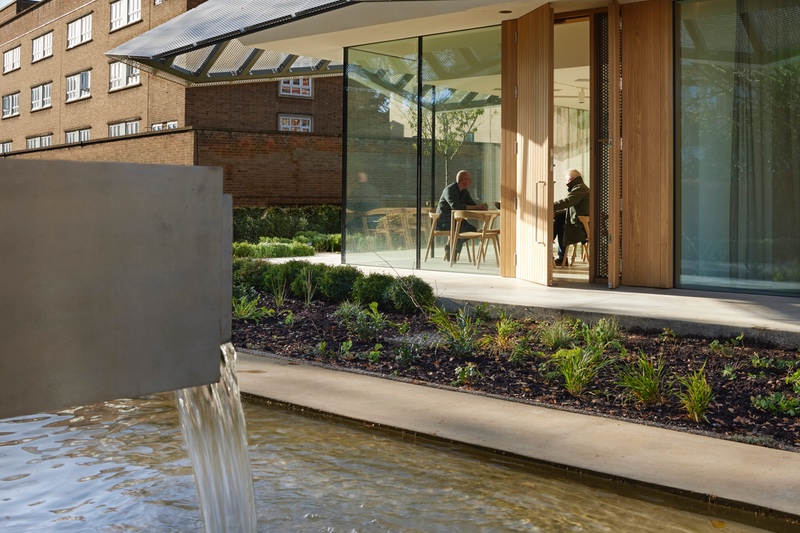
With the centres situated within the sites of NHS specialist cancer care facilities, the walk over to a Maggie’s should feel like a notable shift away from the hospital itself. To this end, the help of landscapers is routinely enlisted early on in a project’s lifespan: after all, it’s been proven that access to and views of nature improve patient wellbeing.
Maggie’s centres often pair garden design with floor to ceiling glazing panels, to create a carefully considered connection between the inside and out. Crucially, this is all planned from the outset. Retrospectively planting some shrubs and flowers simply does not have the same impact as planning exposure to nature and maximising the use of natural light through intelligent and thoughtful design.
Even pathways leading up to the entrances need to be carefully considered: are these external hallways inviting enough? Have we made the green space outside the centre as wonderful as we can to provide visitors with that tiny extra sense of warmth and welcome? These instincts can make all the difference to people with cancer, as well as family and friends, who may find it initially daunting to step foot inside a Maggie’s centre.
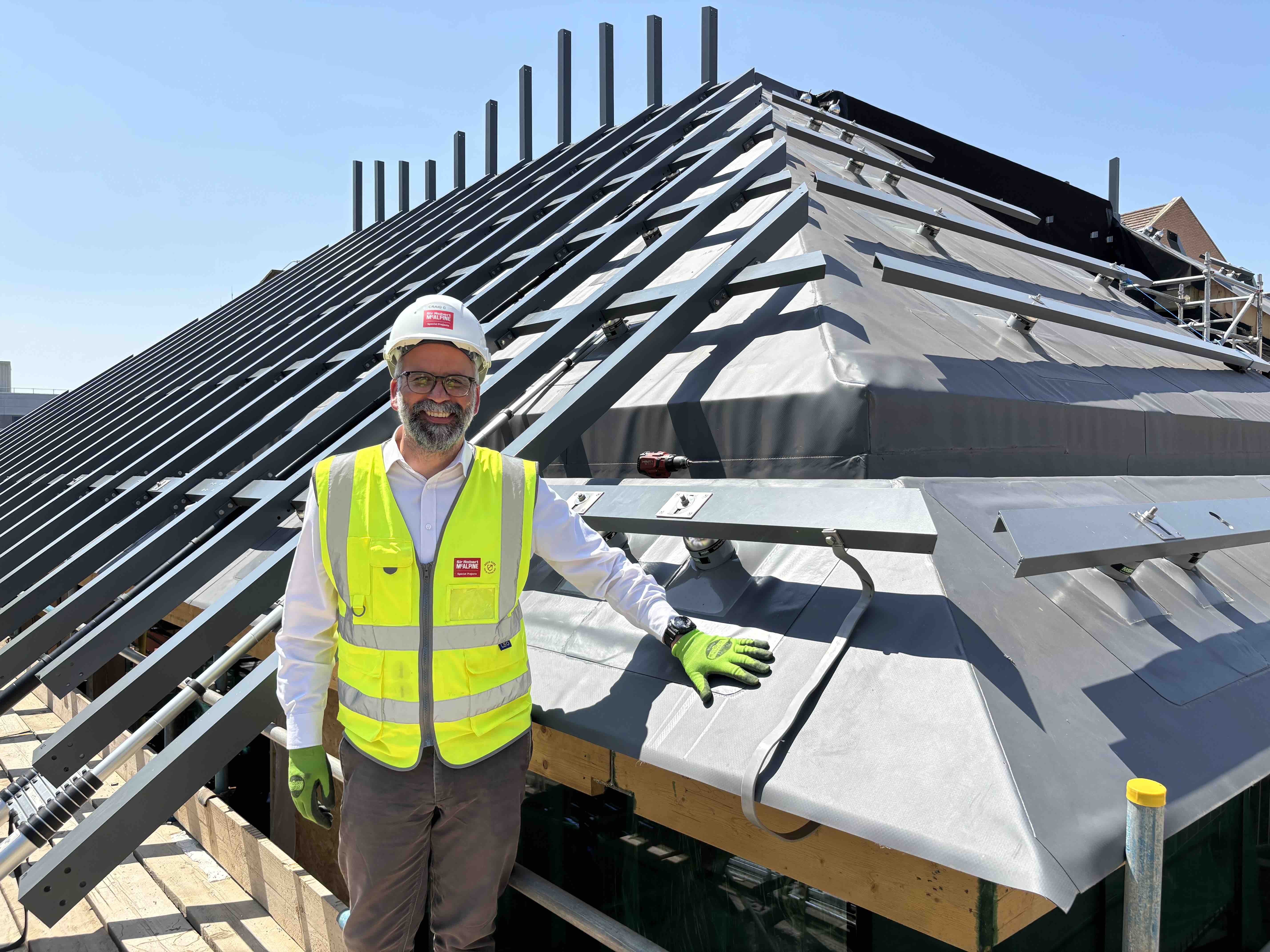
At the Maggie’s centre in Northampton, for example, the team at Sir Robert McAlpine created a spectacle worth visiting – its unique cantilevered roof acts as an initial talking point for passers-by and invites them in. And the unique structure of the Maggie’s centre in Swansea, based on a ‘cosmic whirlpool’ concept, looks so vastly unlike other traditional cancer care buildings that visitors can’t help but feel impacted by the design when walking in.
Striking a balance
Designing healthcare facilities is a careful balancing act. Meeting the functional needs of a space that neighbours a hospital and houses patients impacted by cancer comes with complex operational requirements. And this is before factoring in the need to respond to the emotional realities faced by people with cancer, families and carers.
To achieve this, it is crucial that the restorative nature of good design is factored in and recognised from the outset of a healthcare property project – it is only in this way that we can truly make a difference to long-term patient wellbeing.
As expectations of healthcare property continue to evolve, human-centred and carefully considered design will become increasingly integral to the success of these spaces, and the work carried out by Sir Robert McAlpine and Maggie’s has exemplified the benefits that can be reaped.
The ultimate goal is for these principles to become embedded across the wider healthcare construction industry. And project decision makers should try to remember that the key to unlocking patient wellbeing may well lie with their construction teams, architects and designers who have learnt the best ways to support people’s needs through the built environment.


