
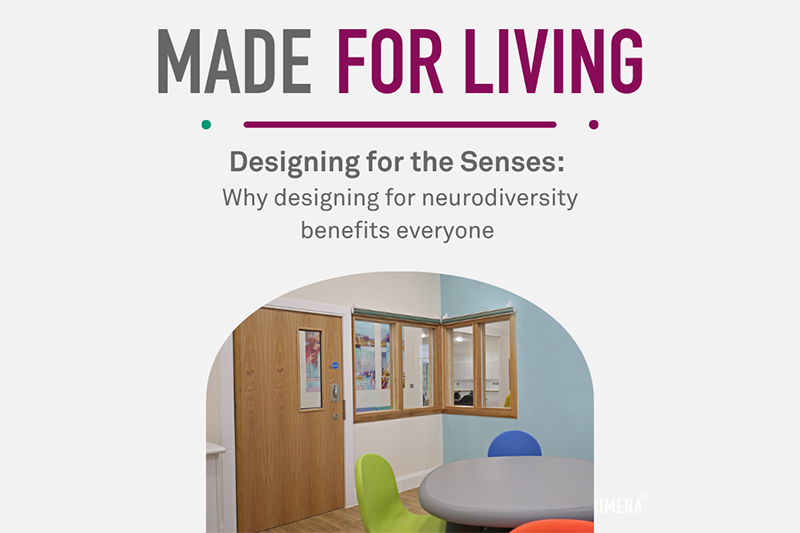
Think about the first ten steps you take into any unfamiliar environment. Now imagine those first steps onto a mental health ward.
Light striking gloss paint and reflecting in harsh beams in all directions, the piercing sound of alarms barely cutting through a room full of conversations, the stuffy heat of the building, the strong smell of lunch being served or even the rough feel of the furniture as your feet walk on firm, squeaky floors.
For most people, these sensory inputs fade into the background over time.
For others, particularly neurodivergent individuals, they remain ever-present, making it harder to concentrate, relax or recover.
Every part of the environment, from the lighting overhead to the sound of an alarm or the smell of lunch being served, shapes how a space feels.
Introducing sensory informed design
Sensory informed design seeks to reduce unnecessary sensory stress rather than designing environments for one group alone. The result can be calmer, more therapeutic spaces that support service users, visitors and staff alike.
This matters at a time when demand for neurodevelopmental support is growing.
Recent responses from NHS Boards across Scotland point to increasing demand for adult assessment, longer waiting lists and a growing recognition that support should not begin and end with diagnosis.
The environments people experience every day are not a replacement for clinical support, but they can play an important role in reducing stress and supporting wellbeing.
To explore the role sensory informed design plays in mental healthcare, we spoke to Dan Stears, a lived experience mental health and neurodiversity advisor who has spent more than 14 years assessing mental health environments.
Drawing on both his personal and professional experience, he advocates for spaces that work better for everyone.
"All we talk about is the senses."

Understanding sensory informed design
Sensory informed design recognises that no two people experience an environment in exactly the same way.
Liz Lavender, an expert in sensory informed design who helped shape the award-winning Brook Hospital, showed us how thoughtful design can have a profound impact on people's experience.
When sensory informed design is put into practice, it can:
-
Improve comfort.
-
Reduce sensory overwhelm.
-
Help create environments where people feel safe, supported and better able to thrive.
While everyone benefits from spaces that are comfortable, calm and easy to navigate, neurodivergent people may experience sensory stimuli more intensely.
Bright lighting, repetitive sounds or persistent smells that many people eventually tune out can remain overwhelming throughout the day.
Importantly, designing with neurodivergent people in mind rarely benefits only one group. Better lighting improves sleep for everyone. Quieter spaces reduce stress for staff as well as service users. Better ventilation creates healthier environments across the board.
Designing for neurodiversity is, ultimately, designing better for everyone.
Creating calmer visual environments
Dan describes how harsh lighting affects him personally:
“If it’s too bright or too intense, I really struggle to maintain my focus. It gives me an absolute headache.”
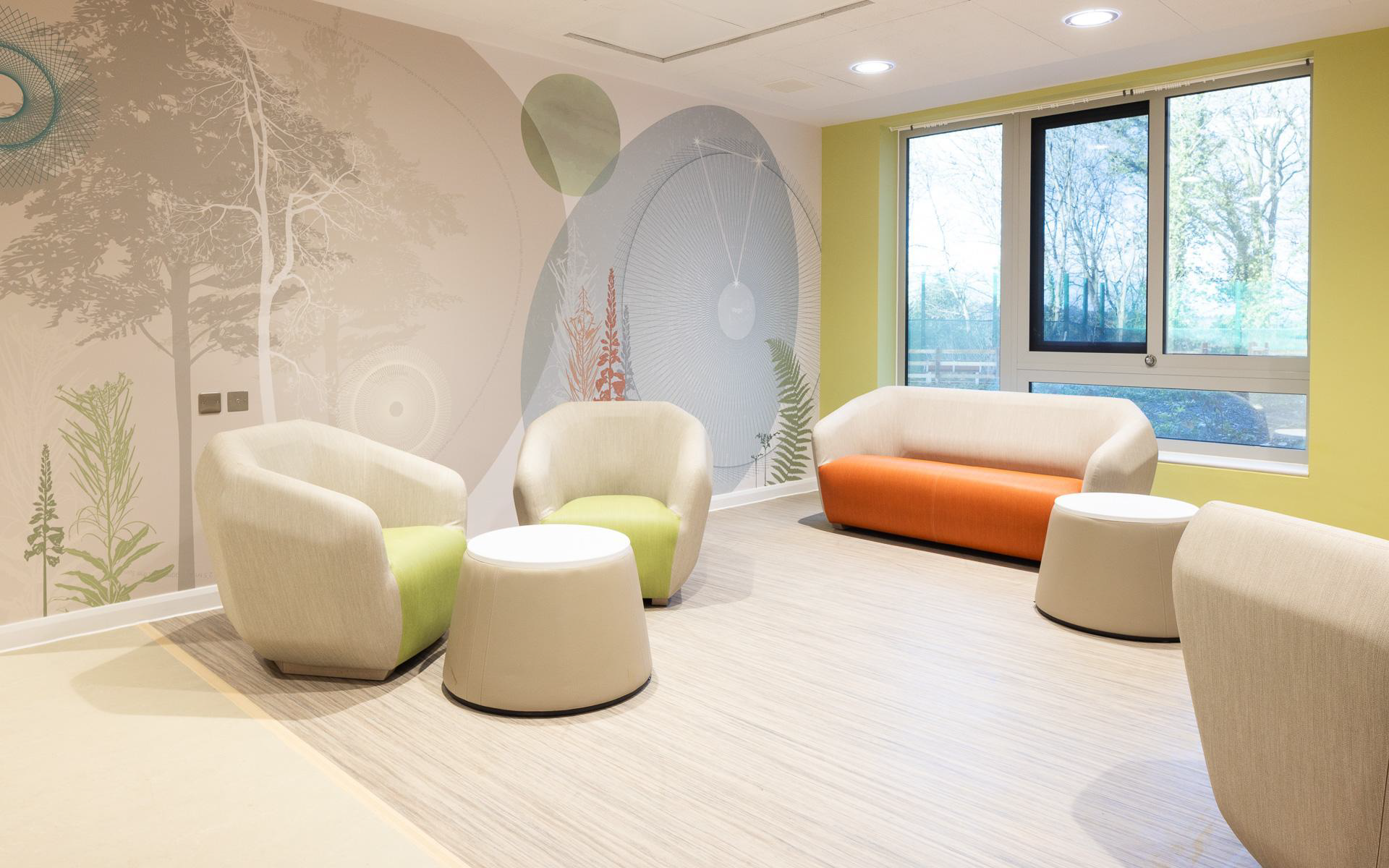
Lighting is one of the most influential aspects of any healthcare environment. Natural daylight can support circadian rhythms, improve mood and help reduce the institutional feel associated with older healthcare buildings.
Modern mental health facilities increasingly incorporate larger windows, softer bedroom lighting and dedicated night lighting to minimise disruption during observations.
In older buildings, smaller changes can still make a difference. Retrofitting night lights, selecting softer, low-glare finishes and introducing biophilic artwork can all help reduce visual strain.
Visual comfort extends beyond daylight. Colour, contrast, glare and reflectivity all influence whether a space feels calm or overwhelming.
Reducing unnecessary noise
Mental health wards are busy places. Conversations, alarms, heavy doors and everyday activity all contribute to the soundscape.
While individual sounds may seem manageable, their cumulative effect can become exhausting.
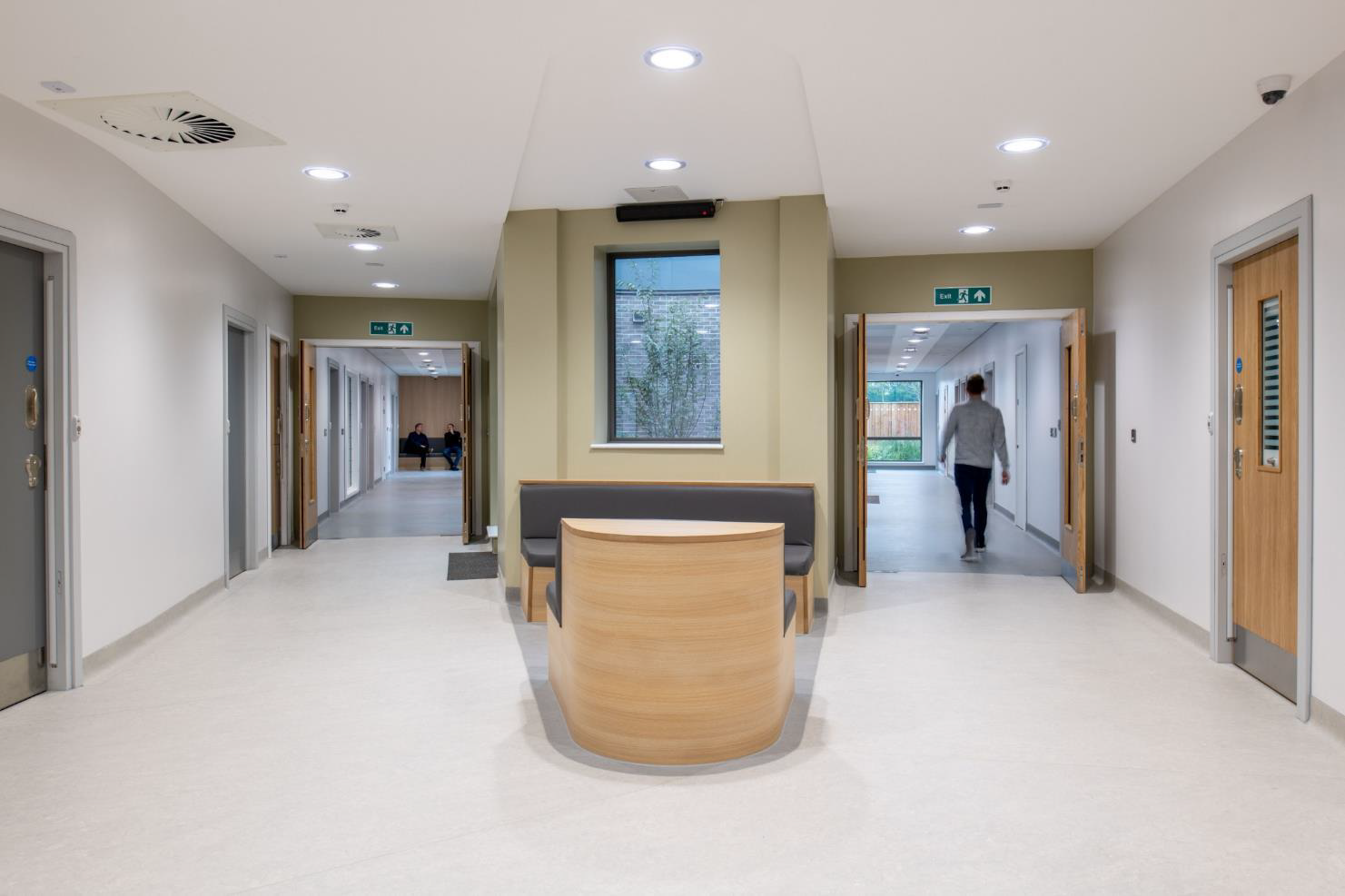
Acoustic ceiling panels can reduce echoes in communal areas. Soft-closing doors, well-positioned quiet rooms and thoughtful alarm management can also help create a calmer environment.
Quieter spaces must also be located and managed around the needs of service users, not simply staff convenience.
This can be seen at Aspen Wood, which looked at ‘How can design unlock better outcomes for people with Learning Disabilities and Autism’.
Aspen Wood demonstrates how thoughtful design can improve experiences for people with learning disabilities and autistic people, placing sensory needs at the heart of the environment rather than treating them as an afterthought.
An overlooked sense
Smell is one of the least discussed aspects of healthcare design, yet it can shape someone’s impression of a space before anything is visibly wrong.
A ward may accommodate up to 30 patients, alongside clinicians, cleaners, maintenance teams and visitors. In a busy, shared environment, food, cleaning products, poor ventilation and ageing infrastructure can create a mixture of persistent smells.
For someone who finds it difficult to filter sensory information, those smells may not fade into the background. They can remain immediate and dominating.
Good ventilation, effective maintenance and thoughtful food service can therefore contribute to a more comfortable and welcoming therapeutic environment.
When combined with thoughtful housekeeping and well-managed dining spaces, these everyday decisions help create environments that feel cleaner, calmer and more welcoming.
Comfort, temperature and personal space
Touch within a healthcare environment is not limited to the materials people come into contact with.
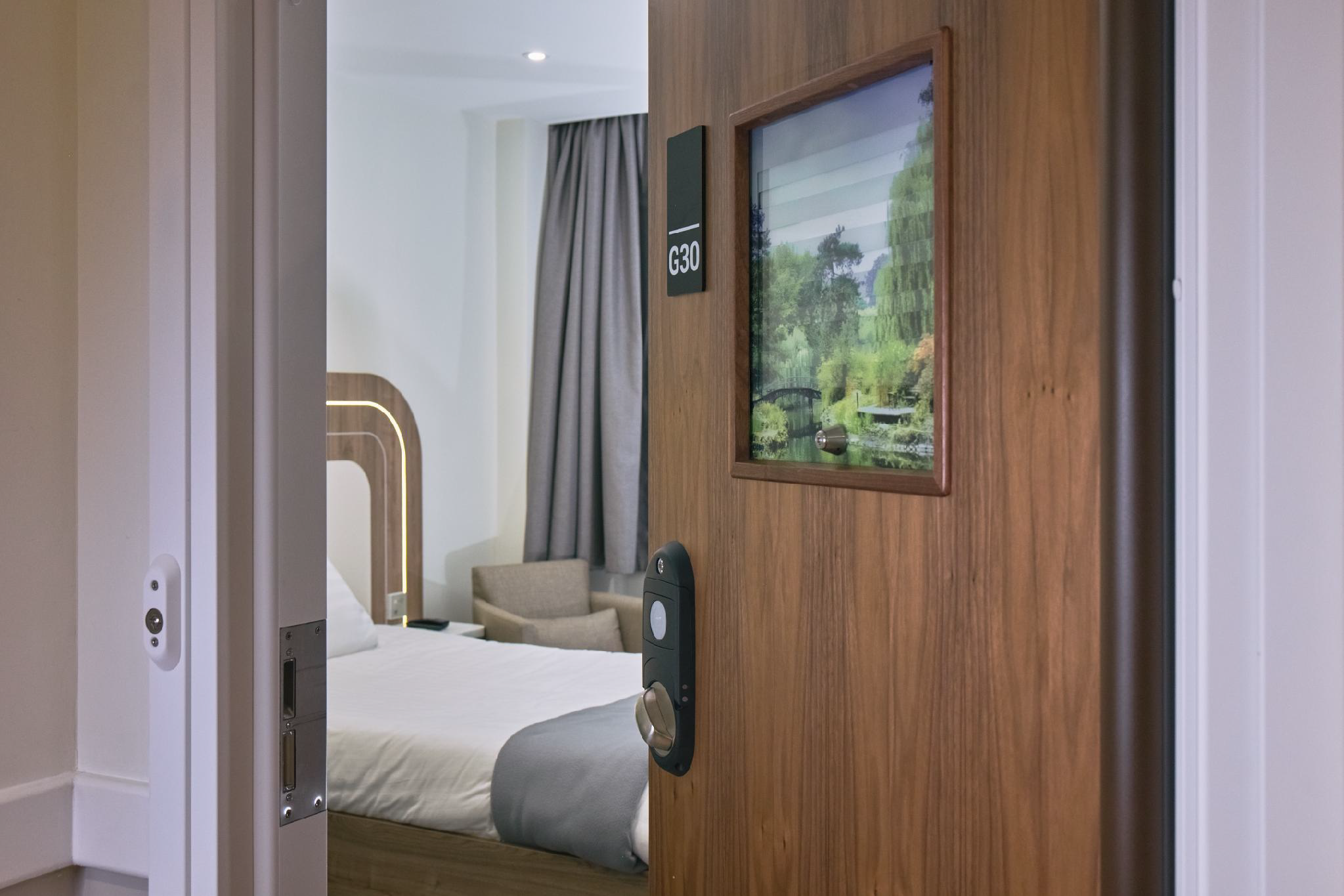
Temperature, airflow, furniture, clothing, personal space and unexpected physical contact can all influence whether someone feels comfortable or under threat.
Dan highlights how easily physical contact can become a source of distress:
“I struggle with contact. If someone comes up and touches my arm and I’m not familiar with them, that really concerns me.”
This is an important reminder that sensory informed care is shaped by both the physical environment and the way people interact within it.
Design cannot address every challenge, but thoughtful layouts, appropriate materials, greater personal choice and consideration of space can support comfort and help reduce escalation.

Food as part of recovery
Sometimes, meaningful change begins somewhere unexpected.
During his work assessing mental health environments, Dan saw how food provision became a catalyst for wider improvement.
“It may be nutritionally valuable and tick a lot of boxes, but when it comes to what people want to eat, it’s just not good enough.”
Nutrition is often discussed from a clinical perspective, but food is also a sensory and emotional experience. Presentation, smell, texture, variety and choice can all influence whether people eat well, particularly during an extended stay.
By working collaboratively with staff and service users, the organisation was able to improve food provision and create a more positive experience.
The work was later recognised nationally through awards for GMMH’s approach to catering. More importantly, it showed how something as ordinary as a menu can support choice, familiarity, connection and recovery.
Small changes can make a big difference
Creating more sensory informed environments does not always require major redevelopment.
Sensory inclusive guidance often emphasises the value of reviewing everyday conditions, including light, noise, temperature, airflow, layout and access to quieter spaces.
Dan encourages staff to begin by changing how they look at the environment:
“Whenever people walk onto their ward, they should walk in with a fresh set of eyes each day.”
In practice, this may mean:
-
Using torches or night lights during observations.
-
Improving ventilation wherever possible.
-
Installing acoustic treatments to reduce echo.
-
Reviewing the location of quiet rooms from the service user’s perspective.
-
Involving people with lived experience when identifying priorities for improvement.
None of these changes are insignificant. Together, they shape how a space feels throughout the day.
Designing environments that support everyone
Mental health environments should do more than meet technical standards. They should help people feel safer, calmer and better supported.
Sensory informed design reminds us that the built environment is not a passive backdrop to care. Light, sound, smell, temperature, materials and food all influence how a place is experienced.
Designing with neurodivergent people in mind creates environments that are more comfortable, more therapeutic and more inclusive for everyone.
As Dan reflects:
“What’s your first impression? It felt peaceful. It felt chaotic. It felt light, bright and airy. All we talk about is the senses.”
Every design decision matters
Light. Sound. Smell. Temperature. Materials. Food.
Individually, they may seem like small details. Together, they shape how people experience care.
Our team works with healthcare providers, designers and estates teams to create environments that reduce unnecessary stress while supporting safety, dignity and recovery.
If you're exploring how sensory informed design could influence your next project, we'd be happy to introduce you to our team or connect you with others already putting these principles into practice.
Resources
Adult Neurodevelopmental Assessment and support provision across NHS Boards: FOI Release
Adult neurodevelopmental assessment and support provision across NHS Boards correspondence: FOI release - gov.scot
National Culture of Care Programme
NHS England's national improvement programme supporting more therapeutic, equitable and person-centred inpatient mental health services.
https://www.rcpsych.ac.uk/improving-care/nccmh/culture-of-care-programme
Culture of Care Standards
A framework to help providers create environments where people feel safe, respected and supported throughout their care.
https://www.england.nhs.uk/long-read/culture-of-care-standards/
Liz Lavender Design
Liz Lavender is an interior designer and Expert by Experience specialising in sensory informed design across healthcare, education and residential settings. Her work demonstrates how thoughtful choices around light, colour, acoustics and materials can create calmer, more therapeutic environments.
https://www.lizlavender.co.uk/
The Environmental Hub
A practical, NHS-supported resource co-produced by Liz Lavender and NHS England South West, offering guidance on creating sensory informed environments through everyday design decisions.
https://www.theenvironmentalhub.uk/
Further reading from Safehinge Primera
Why art and interior design should be part of your safety strategy
Explores how art, colour and sensory informed design can help create safer, calmer and more therapeutic mental health environments.
How co-production builds trust, creates purpose and real change
Dan Stears shares how meaningful co-production leads to better decisions, stronger relationships and improved mental health environments.


