
Few building types present a fire safety challenge as complex as a hospital. These healthcare environments are occupied by vulnerable patients who may be bed-bound and therefore unable to self-evacuate.
In addition, hospitals often have complicated layouts spanning wards, corridors, theatres, accident & emergency and other specialist departments. As part of their safety policies, they regularly have "stay-put" or phased evacuation strategies, which place enormous weight on one design element that can be overlooked until something goes wrong: compartmentation.
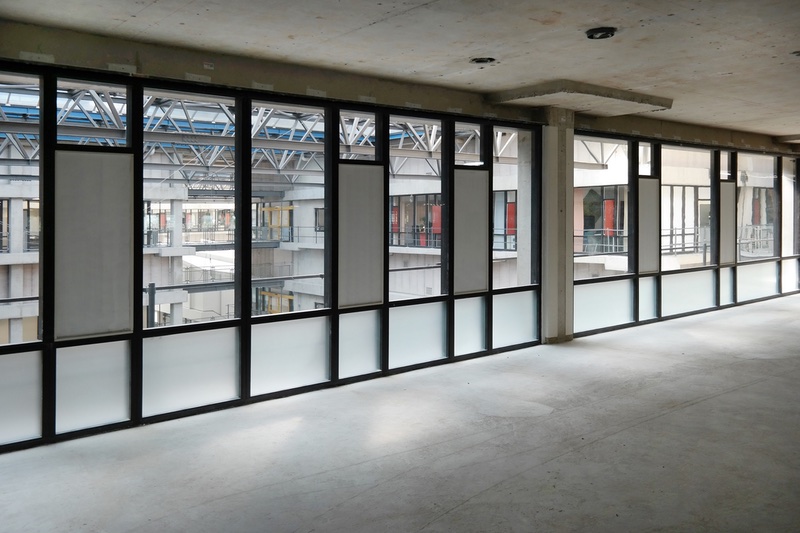
What needs to be considered is that glazing specified throughout a hospital is not simply an architectural finish, it is a critical piece of passive fire protection infrastructure.
It works silently in the background to contain fire and smoke long enough for safe, phased evacuation to take place. When fire safety glass is incorrectly specified, the consequences can be life-threatening.
When it is specified correctly, fire safety glass delivers more than just fire safety alone – it maximises natural light, privacy and infection control across the wider healthcare estate.
Why hospitals are different
The fact that healthcare buildings have a "stay-put" or phased evacuation policy, due to the fact that many patients simply cannot be moved quickly, if at all, makes robust compartmentation essential.
Buildings are divided into a series of fire-safe zones, so that in the event of a fire, patients who are too unwell to evacuate can remain safely in place while the fire is contained elsewhere.
Achieving this depends on the correct specification of fire safety glass, from E-rated glass (protecting against flame and smoke) through to EI-rated glass, which adds insulation against radiant heat and is generally the preferred solution wherever a stay-put policy is in place.
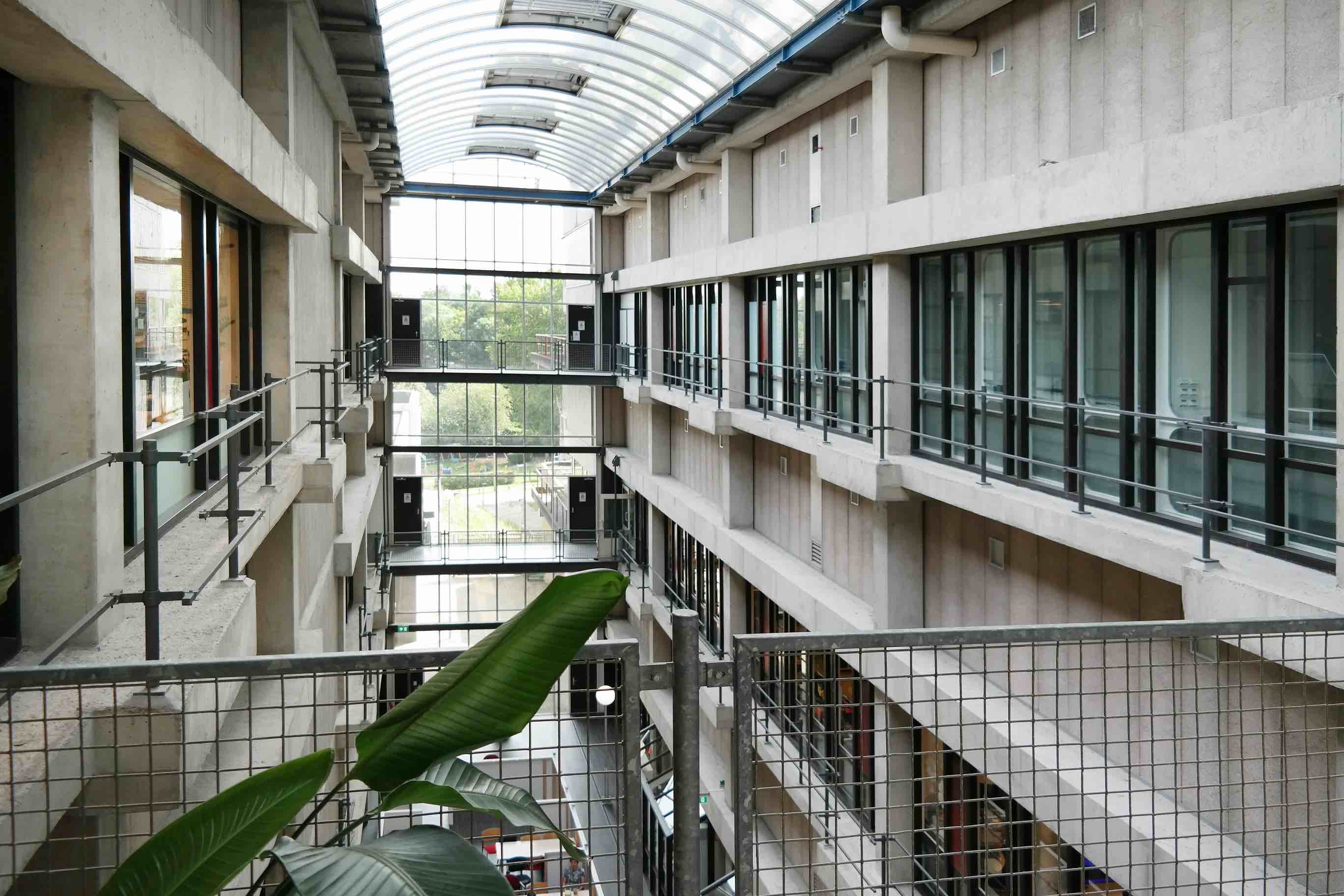
AMC Hospital in the Netherlands
A move away from wired glass
For decades, wired glass was the preferred choice for fire safety glass in doors and screens in hospitals and other public buildings. It was effective in terms of fire performance, but it came with some disadvantages, which include a dated, institutional appearance, reduced clarity and a wire mesh that can actually weaken the glass on impact rather than reinforce it.
The market has moved on considerably in the last 10 years. Modern cuttable fire safety glass, such as Pyroguard Advance, offers improved fire performance without the traditional look of embedded wire, giving specifiers a more contemporary product with better aesthetics that can be processed on site much like standard float glass.
For decades, wired glass was the preferred choice
For healthcare managers or estates teams weighing up refurbishment options, this matters as it means that fire-rated glazing no longer has to look like fire-rated glazing. It can provide a more appealing residential aesthetic that so many modern healthcare environments are now aiming for, while still meeting rigorous fire safety standards.
This shift is particularly relevant for the large number of ageing hospital buildings across the UK that still rely on legacy wired glass installations. Refurbishment programmes provide a natural opportunity to replace outdated safety systems, whilst bringing buildings up to current standards without a full rebuild.
Design details that matter
Beyond the glass itself, the way it is detailed and installed can make a meaningful difference to both function and feel. Flush beading, for example, removes the traditional protruding timber or metal bead around a glazed screen, creating a more hygienic, easier-to-clean surface. This offers a significant advantage in an environment where infection control is paramount.
Privacy is another area which impacts the specification of internal glazing. Traditional fabric blinds can be difficult to keep clean in clinical spaces and are increasingly being replaced by integrated blinds housed within the glazing unit itself, which are sealed away from dust and contamination.
Where a permanent solution is preferred, frosted or satin-finish privacy glass offers a maintenance-free alternative, allowing light to pass through while shielding patients from view in consulting rooms, treatment areas and wards.
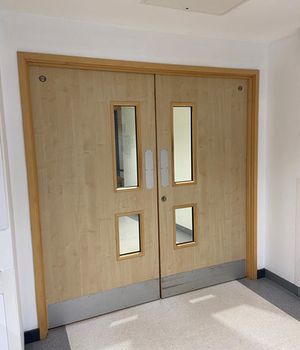
Double door wired glass door in a hospital
AMC Hospital
What a difference the refurbishment of fire safety glass can make was clearly demonstrated at AMC Hospital, one of the largest healthcare facilities in The Netherlands. As part of a major renovation, over 10,000 sqm of outdated wired glass was replaced with modern fire safety glass, upgrading the building to current standards while achieving a more contemporary look throughout.
Pyroguard Rapide was specified for internal partitions in both clear and satin finishes, with Pyroguard Protect used where larger, bespoke panes were required. The project also brought consistency and traceability to the glazed products used across the site, a major benefit for any estates team managing a large, multi-phase glazing installation with a long history of ad hoc replacements.
What this means for healthcare managers
As hospital estates continue to be modernised across the UK and Europe, updating the glazing offers a genuine opportunity to meet fire safety obligations without compromising on the daylight, privacy and dignity that support patient recovery.
The technology now exists to deliver all of this in a single product. The task for the healthcare sector is making sure fire safety glass is specified correctly, consistently and with a building's complete fire strategy in mind.”
Image credit: Pyroguard


