
Made for Living | In conversation with Stephen Parker, Architect
We say therapeutic design you say trauma informed
For decades, mental health environments have been shaped by the need to manage risk. Secure doors, robust fixtures and controlled spaces all play an essential role in protecting people through vulnerable times.
But physical safety is only part of the picture.
Stephen is a US architect whose work spans across specialist mental healthcare facilities, from community recovery centres to inpatient environments.
He is an Associate of the UK's Design in Mental Health Network and a practitioner with the Trauma Informed Design Society giving him a unique and valuable perspective on how the two countries approach safety, therapy and the built environment.
From managing risk to understanding trauma
In the US, behavioural healthcare design has historically focused on institutional safety and risk management. The growing influence of trauma informed care is changing that perspective.
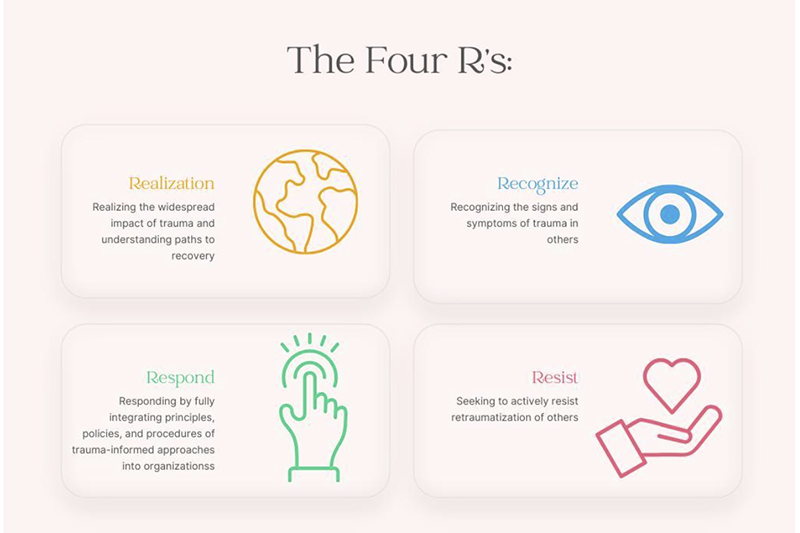
Stephen highlights the role of the Substance Abuse and Mental Health Services Administration (SAMHSA), whose Four Rs framework encourages services to realise the impact of trauma, recognise its signs, respond appropriately and resist retraumatisation.
For designers, this means considering not only what a building must prevent, but how people experience it.
Does a space offer privacy and choice? Do safety measures provide reassurance or reinforce restriction?
Where lived experience and therapeutic design enters the process
One interesting difference between the US and UK is how lived experience influences decisions.
In the US, peer support is a recognised principle of trauma informed care, although this tends to be included in the provision of care as opposed to engaging with estates and the wider industry.
In the UK, people with lived experience are increasingly involved directly in designing facilities, products and processes, working alongside NHS trusts, clinicians and architects.
Both approaches recognise the importance of listening. The opportunity lies in bringing these perspectives together.
A bedroom door, for example, must meet safety requirements and allow emergency access. But someone who has experienced inpatient care might ask something different: does it give me privacy and feel like my own space?
While it may be said that the UK is further down the road of incorporating lived experience at various levels of decision making, perhaps UK trusts could consider integrating experts by experience into frontline care.
Good design considers both. Safety should protect people without taking away their dignity.
Different funding systems, shared pressures
Even when everyone agrees on what better care environments should look like, funding can stand in the way.
In the UK, NHS capital investment operates within established public funding structures. Budgets are limited and projects compete for priority, but approved schemes can benefit from greater funding certainty.
In the US, Stephen describes a much more varied system, with projects drawing on federal, state, county, private and reimbursement funding.
This can make planning unpredictable, but may also allow some facilities to move more quickly when funding becomes available.
Despite these differences, both countries face a familiar challenge: demonstrating why investment in safer, more therapeutic environments matters.
The value of getting design right
The true cost of a healthcare environment goes beyond its initial construction or refurbishment.
Doors that are difficult to operate during emergencies, fixtures that repeatedly fail and environments that feel unnecessarily restrictive can all place additional pressure on staff and service users.
Reliability, maintenance, staff confidence and patient dignity all contribute to the long term value of a building.
The changing front door of mental healthcare
One of the most significant developments Stephen discusses is taking place beyond traditional inpatient wards. An area where the US has arguable been further ahead in, and continues to move at pace.
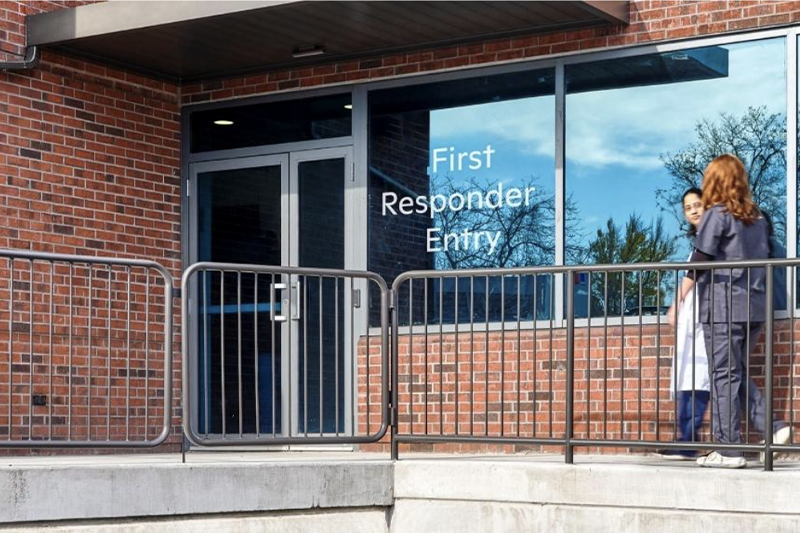
Across the US, dedicated behavioural health crisis facilities are changing how people access emergency mental healthcare.
Historically, someone experiencing a psychiatric crisis might arrive at a general emergency department, an environment not always suited to their psychological needs.
New models are offering alternatives.
Among them is EmPATH, or Emergency Psychiatric Assessment, Treatment and Healing, associated with psychiatrist Dr Scott Zeller.
These dedicated services provide assessment and stabilisation in environments designed specifically for people experiencing mental health crises.
The aim is to deliver appropriate care earlier, helping individuals access inpatient treatment, community support or discharge according to their needs.
A different environment for a different moment
Designing for crisis care requires a different balance of safety, observation, privacy and dignity.
A busy emergency department may be appropriate for physical emergencies, but noise, unfamiliar surroundings and long waits can intensify psychological distress.
Trauma informed design offers an opportunity to create calmer, more supportive spaces that respond to people's needs during a crisis.
When services grow faster than design guidance
Stephen highlights the rapid growth of smaller crisis facilities across the US, often supported by new funding opportunities.
However, specialist design guidance for these settings is still developing.
This creates a challenge for smaller communities that may lack access to experienced behavioural healthcare designers.
Lessons already learned in inpatient settings should not need to be learned again in crisis facilities.
How can the UK learn as it reinvigorates community mental healthcare
With Prime Minister Andy Burnham's recent announcement of £343 million in funding for 100 new community mental health centres and 59 mental health emergency departments across
England, the UK is entering an important new chapter in mental healthcare.
The ambition is clear: bring care closer to communities, intervene earlier and reduce pressure on traditional emergency departments.
But as investment accelerates, how do we ensure these new spaces are designed around the people who will use them?
In our recent article on Mental Health Emergency Departments, we explored how dedicated crisis environments could transform emergency mental healthcare. And in our conversation with Charlotte Burrows, The Future of Community Mental Healthcare, we discussed the importance of creating services shaped by the needs of local communities.
Stephen's experience in the US offers timely lessons. From established EmPATH models to the challenges of designing smaller crisis facilities, there is much to learn from what has worked, and what hasn't.
As the UK invests in these new services, we have an opportunity to draw on those experiences from the outset, creating environments that support safety, dignity and recovery rather than expanding capacity.
Learning from each other's hard lessons
Perhaps the most valuable lesson from Stephen's perspective is that progress depends on sharing what hasn't worked, as well as what has.
The US offers experience in specialist crisis care, trauma informed design frameworks and flexible community services.
The UK offers valuable examples of embedding lived experience into decisions about mental healthcare environments.
Neither system has all the answers.
But sharing practical lessons, from building layouts and clinical workflows to funding and product design, can help others avoid repeating mistakes. And those lessons matter.
A poorly positioned room, an awkward access route or a door that's difficult to operate under pressure can affect the everyday experiences of patients and staff.
Learning from those details can make a meaningful difference. If have any ideas or would like to feature in a future made for living give us a call.


