


Day two of Digital Health Rewired 2026 brought together national leaders and frontline teams to explore how digital strategies are moving from policy into implementation, with a strong emphasis on integration, workforce pressures and real-world deployment.
A central theme across the day was the operationalisation of integrated care.
The Day 2 sessions examined how digital tools, shared care records and neighbourhood health models are connecting services across primary, community and mental health settings.
One of the individuals focused on this work is Philippa Tucker, Senior Innovation Manager for the NCL Health Alliance.
The NCL Health Alliance the NHS provider collaborative for North Central London and is working with partners to harness innovation for the neighbourhood care of complex, multi-morbid patients.
The project draws on the London Secure Data Environment linked records to identify patients with complex underlying health issues and aiding their recovery.
Tucker said a specific example of this was identifying a patient who was afraid to leave her home, and who then received home visits to help get her back into care.
Innovators for neighbourhood care are being asked to focus their integration energy on patients with multiple long-term conditions.
A machine learning model being developed by the NCL team is helping to assist clinicians in reducing the number of patients for review from many thousands to a few hundred.
Speaking to Building Better Healthcare about the model, Tucker said: “The panel that I was chairing yesterday is talking about a programme of work to try and help identify and manage people with multiple long-term conditions.”
Tucker said she has been working with the ICB team on the machine learning model programme for the last six months.
The team is still developing the platform, but anticipates going live with it by summer or autumn.
“The NCL Health Alliance team that I'm part of is a pretty small team but we're part of UCL Partners, one of the Health Innovation Networks, which is a much bigger organisation, ” said Tucker.
Building internal AI systems for the NHS
Alongside this, the Health CIO and Digital Leadership discussions focused on scaling technology investment in the face of financial and workforce constraints.
With a £10bn NHS technology funding boost in focus, sessions explored how organisations are prioritising infrastructure, cybersecurity and system-wide interoperability to support long-term transformation.
Artificial intelligence remained a key pillar of the day two agenda, particularly within the CNIO and data-focused sessions.
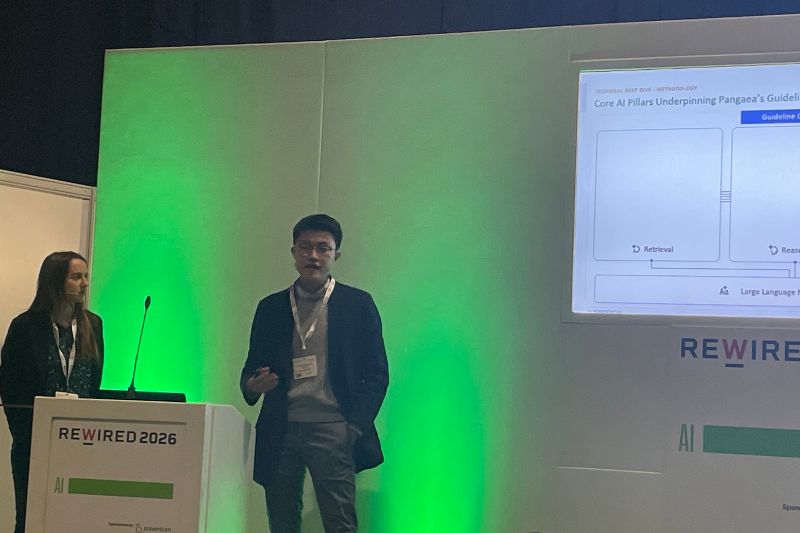
One of the speakers, Jingqing Zhang, Head of AI at Pangaea Data, focused on how AI is transforming cancer care through both NHS-led innovation and advanced data-driven approaches.
“We have developed [a platform] to help the NHS in the UK to find a patient who has cachexia from cancer. [Cachexia is often] undiagnosed or untreated for this particular kind of condition. It's a wasting syndrome for a cancer patient who is losing their muscles, losing their weight. Apparently, it is a quite significant issue,” Zhang told Building Better Healthcare. “We are actually helping the NHS with how it can find this patient more accurately, earlier in the journey.”
Protecting the digital infrastructure
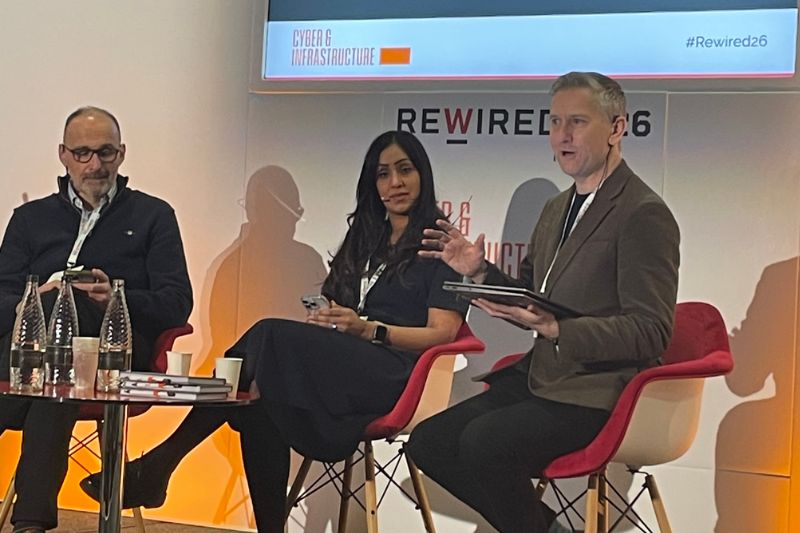
One of the final sessions of the conference focused on digital infrastructure and whether the NHS has the protections needed to prevent and respond to cyber attacks.
“Having a holistic view is something we have a problem with,” said Raz Edwards, DPO and Head of Data Security at the Royal Wolverhampton NHS Trust, during the panel.
“We invest in the technology, but are we investing in the people who use the technology? Who will maintain the machines?”
Edwards has noticed in her work with cyber attacks and security that there is an ignorance about the ability to recover quickly, and that the more the NHS relies on tech, the less it will be able to recover well.
Take aways from the 2-day event
The two-day event, which featured more than 100 sessions across 10 stages, concluded with a clear message: digital transformation in the NHS is entering a phase of execution, with collaboration between national leaders, local systems and technology partners critical to delivering measurable impact.


