

Wave 3 of the UK’s New Hospital Programme was slotted for construction to begin by 2035-2039.
However, a recent NAO audit review estimates that the NHS’s headline healthcare development funding programme will experience further delays, with the completion dates of the so-called “Wave 3” projects being well into the 2040s.
St Mary’s Hospital is one such “Wave 3” project. Despite this news, Imperial College Healthcare NHS Trust has continued on with design plans, which are now entering the second round of public consultation.
This next phase of consultation will run from 4 June to 17 July 2026.
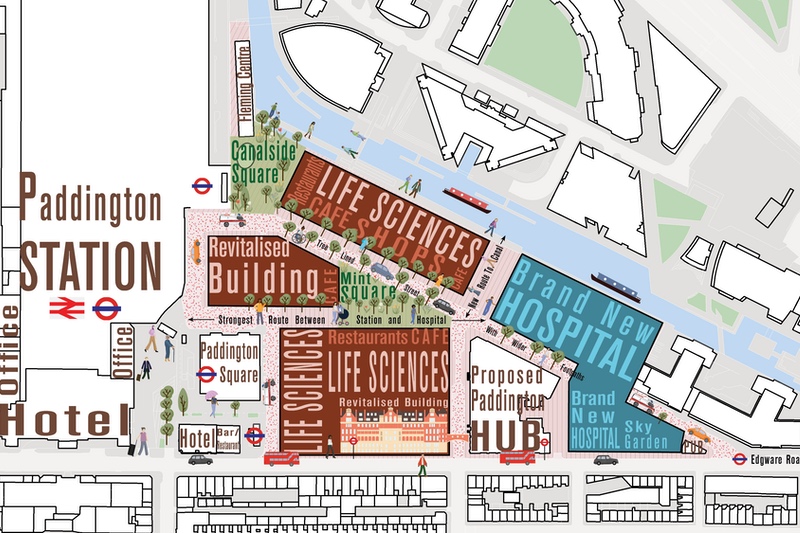
The redevelopment plans see the construction of a new, 800-bed major trauma and general hospital to meet growing needs and make the most of new technologies and models of care. Currently, the site is one of the oldest in the NHS, with parts dating back to its foundation in 1845.
In the new design, instead of services being spread across several buildings developed piecemeal over time, the new hospital will be a single, taller building on a smaller footprint.
This will also enable the wider regeneration of the site to include an expansion of the existing cluster of health and technology businesses (Paddington Life Sciences) that has developed around St Mary’s.
The council has already approved plans for the new Fleming Centre at St Mary's Hospital, which will be a six-storey building designed by Stanton Williams and involve repurposing and extending "The Bays" warehouses.
Following further consultation later in 2026, the Trust is aiming to submit a planning application for the main hospital redevelopment and the wider site in spring 2027.
With partners in the wider St Mary’s Redevelopment Funding Taskforce, Imperial College Healthcare is continuing to explore additional financing sources and models to allow the main hospital building works to begin as soon as there is planning permission in place.
The layout and design is being designed to be flexible, allowing spaces to be adapted easily if needs change, such as during the pandemic
The design of the new St Mary’s Hospital
With NHP funding, the Trust has been carrying out detailed design and planning work with the support of a wider programme team, including leading development managers Stanhope, masterplan architects Allies and Morrison, as well as hospital design architects HOK.
The latest proposals up for consultation have been informed by responses to the first phase of public consultation, which took place earlier this year.
These responses indicated strong support for the Trust’s approach.
The Trust says that the 30-storey build approach will provide better links between emergency care, diagnostics, theatres and intensive care. “It will be much easier for patients and visitors to navigate and be more efficient to operate,” the organisation said.
Has your NHS trust delivered a project that’s improving care environments or operational performance? The Building Better Healthcare Awards provide an opportunity to celebrate the innovation, collaboration, and dedication driving healthcare improvements across the NHS. Share your success story and gain recognition for your team’s hard work.
The layout and design is also being designed to be flexible, allowing spaces to be adapted easily if needs change, such as during the pandemic.
It is said that there will also be integrated teaching, research and engagement spaces to support innovation and learning.
The busiest and most urgent services will be on the lower floors, so they are the easiest to reach, while wards will be in quieter areas with more privacy and natural light. And outdoor and communal areas, such as roof gardens, are being integrated into the design to support patients, visitors and staff. There will also be a helipad, bringing St Mary’s major trauma service into line with other services across the capital.
Image credit: Imperial College Healthcare NHS Trust


