

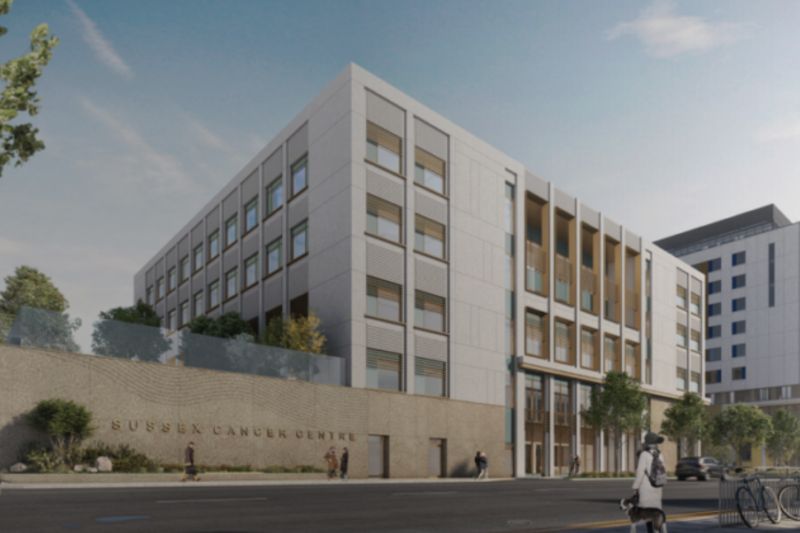
Laing O’Rourke has been appointed as the main contractor for the new Sussex Cancer Centre at the Royal Sussex County Hospital.
The contract was awarded following the confirmation of a £250m investment from the government and the New Hospitals Programme to fund the delivery of the new Sussex Cancer Centre.
The project will deliver a regional Centre of Excellence for cancer care, serving an estimated two million people across Sussex.
The new facility is designed to significantly enhance cancer treatment capacity and patient experience for more than 60,000 patients annually.
Construction is expected to begin in 2026, with completion anticipated toward the end of the decade.
The scheme forms part of the first wave of the government’s revised New Hospitals Programme, a flagship national initiative to modernise clinical facilities across the NHS.
What will the new facility feature?
Once completed, the new facility will offer contemporary clinical spaces ranging from advanced radiotherapy suites and expanded outpatient clinics to supportive day-unit facilities and a top-floor ward with sea views.
“Leveraging digital design and offsite manufacturing, along with our integrated supply chain, we’ll be able to minimise disruption to local residents,” said Peter Lyons, Managing Director of Laing O’Rourke.
How the facility is part of a larger masterplan
The company recently delivered the Louisa Martindale Building on the same campus.
The Sussex Cancer Centre is the second major build in the broader 3Ts redevelopment of the Royal Sussex County Hospital, following the new Louisa Martindale Building.
The Louisa Martindale Building won a Building Better Healthcare Award for the the grand prix design category in 2024.
As part of the project’s masterplan, plans call for a new landscaped garden and public realm space between the two buildings, creating a welcoming and cohesive healthcare campus environment.
The facility will include dedicated spaces for clinical trials and new technologies, aiming not only to deliver outstanding care but also to foster scientific progress close to home.
The centre also features a dedicated Oncology Acute Assessment area designed to prevent more than 1,000 vulnerable cancer patients from needing to attend general A&E each year.


