
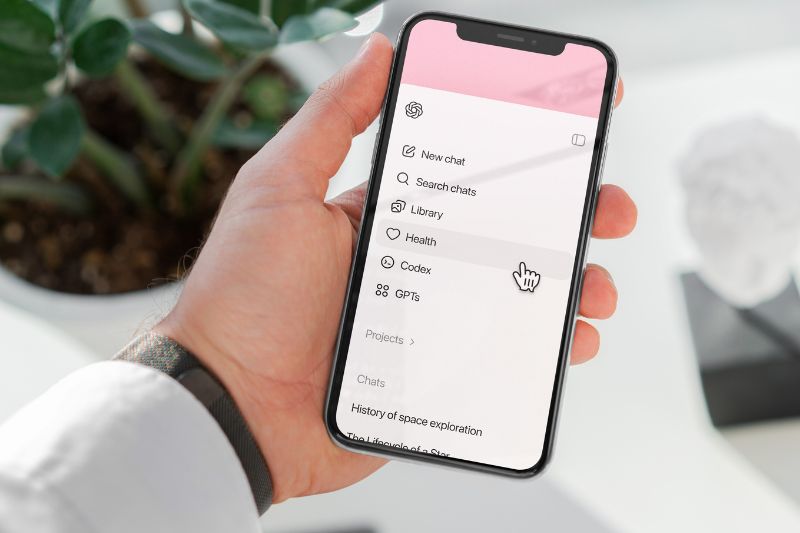
AI in healthcare is often discussed in terms of potential: what it might automate or accelerate. What is changing now is how patients seek information alongside their care.
The launch of ChatGPT Health comes at a time when patients are already exploring AI tools to navigate their healthcare, marking a pivotal step in making these tools a practical, accessible part of care.
Recent survey data makes this clear. One in four UK patients already use AI for health guidance, and almost a third would consider consulting AI or social media rather than waiting for a clinician.
This is a signal worth paying attention to. It highlights the areas where patients seek support, from making sense of symptoms to understanding medication, showing how digital tools can help them stay informed and engaged.
Turning AI insights into safe, informed care
While this reflects a growing desire among patients to stay informed, AI cannot operate in isolation.
As patients bring AI-generated insights into consultations, misjudged information or incomplete conclusions could cause unnecessary anxiety, highlighting the need for clinician guidance.
In practice, AI becomes a tool for dialogue, enabling clinicians to understand patient concerns, correct misconceptions, and guide informed decisions.
AI should not be treated as a shortcut. It should act as a bridge, connecting information, clinicians, and patients in a way that reduces uncertainty. That means clear clinical oversight, prioritising safety and continuity over convenience.
The human-AI partnership in action
AI is not a replacement for care. Rather, it can serve as a partner in shaping patient healthcare journeys.
Embedded in routine practice for both patients and clinicians, AI can make education and explanation a natural part of care, helping patients feel informed and confident in their decisions.
The key will be ensuring patients understand the limitations of AI and that clinicians remain the guide in interpreting and acting on that information.


