
The NHS is one of the largest energy users in the UK, and decarbonising its estate is a key part of the broader government climate commitments. Yet hospitals face a challenge unlike any other sector: power must be continuous, resilient and uncompromisingly reliable, even as carbon emissions are driven down.
When environmental sustainability cannot come at the expense of patient safety, solutions that balance resilience with carbon reduction must become central to NHS energy strategies.
With extensive experience supporting over 800 healthcare sites across the UK with backup power systems, Dale Power Solutions is uniquely positioned to share practical insights into how decarbonisation can be achieved without compromising critical power reliability.
Mark Henderson, Sales and Marketing Director at Dale Power Solutions, explores some of the most effective options available to the NHS to help hit its net-zero-by-2040 goal.
Reducing carbon with HVO fuel
One of the fastest and most impactful ways to lower emissions from backup power is the use of hydro-treated vegetable oil, or HVO. This renewable alternative to diesel can reduce CO2 emissions by up to 90% compared to conventional diesel.
For many existing diesel generators, HVO can be adopted after a thorough system clean. This avoids the need for significant equipment replacement while enabling hospitals to make meaningful progress towards net zero. Beyond carbon reduction, HVO also produces lower particulate emissions, contributing to improved air quality in and around healthcare estates.
Transitioning to HVO works with NHS decarbonisation targets, allowing trusts to integrate renewable fuels into existing infrastructures. It also demonstrates how operational continuity and sustainability can coexist in critical healthcare environments.
Battery storage as a complementary solution
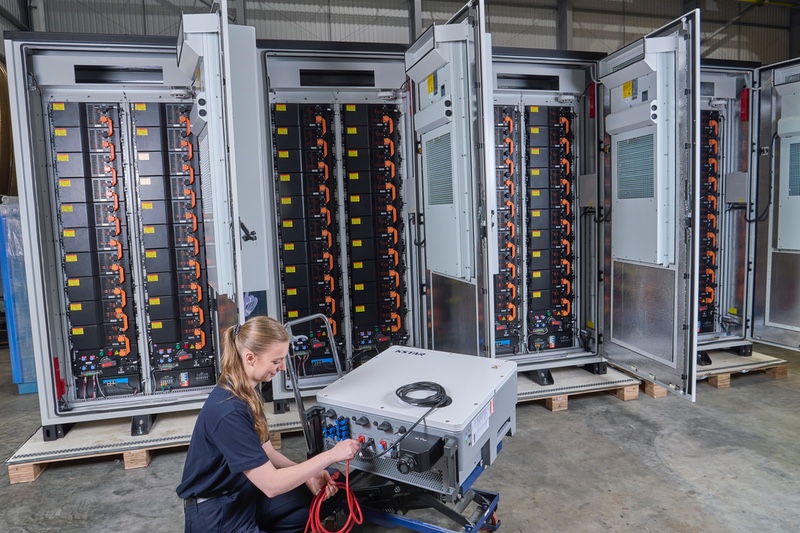
While generators remain vital for resilience, battery energy storage systems are playing an increasingly important role in reducing carbon emissions and improving energy efficiency.
Battery storage enables estates teams to manage demand intelligently through peak shaving – reducing the amount of energy drawn from the grid during periods of high demand - reducing reliance on grid electricity during periods of high demand and carbon intensity.
On-site battery systems can be deployed with no upfront cost, funded instead through operational savings, and complementing standby generation rather than replacing it. This provides immediate power during outages, facilitates a smooth transition to backup systems, and allows more controlled generator testing.
Much of the existing NHS estate is made up of older buildings, many of which are not technically or structurally suitable for renewable installations. This presents an added challenge in meeting carbon reduction targets. Where renewables such as solar systems can be installed, they can be integrated with containerised battery storage, helping to reduce reliance on grid power and improve overall energy resilience.
Often, it is small changes, such as switching to HVO or introducing battery storage for peak management, that deliver measurable reductions without disrupting patient services
Extending equipment life
Decarbonising the NHS power infrastructure requires a ‘whole system’ approach. Fuel choices, generator specifications, battery storage and energy monitoring all need to work together to deliver lasting carbon reductions. Often, it is small changes, such as switching to HVO or introducing battery storage for peak management, that deliver measurable reductions without disrupting patient services.
Making sure the equipment you install operates at peak performance is also part of this approach. Consistent maintenance, asset knowledge and proactive planning ensure that decarbonisation measures will continue to work effectively over time. Choosing the right team to plan and deliver maintenance is vital to patient safety and ensures that equipment operates consistently and reliably at peak efficiency.
Combining resilience with sustainability
The NHS faces the dual challenge of maintaining uninterrupted power for patient care while meeting some of the most ambitious net-zero targets in the public sector. Decarbonisation initiatives must complement, rather than compromise, resilience and practical, tried and tested solutions, such as the ones we have talked about here, can achieve both.
By prioritising measurable reductions in CO2 and particulate emissions, hospitals can make progress towards sustainability without increasing operational risk. This approach empowers estates teams to manage energy more effectively, support national climate targets, and maintain the high standards of reliability that healthcare demands.
Looking ahead
As the NHS continues its decarbonisation journey, solutions that are operationally proven will be critical. Renewable fuels such as HVO and smart battery storage systems are already delivering results across NHS estates, demonstrating that low-carbon energy systems and reliable patient care can coexist.
The focus for NHS Trusts should now be on integrating these solutions at scale, ensuring every site plays its part in reducing environmental impact while remaining fully powered for the needs of staff and patients. Decarbonising backup power offers a pathway to both a cleaner energy footprint and continued operational excellence in the health service.


