
For more than two decades, the core of Polar NE’s business has been with the NHS.
A leading supplier and designer of reduced-ligature windows and doors, traditional healthcare environments had long been where demand for its innovative products was strongest.
Then came the phone call.
“The need for our products is growing, partially because the definition of healthcare has changed so dramatically,” said Rob Lofthouse, Operations Manager at Polar NE.
“Once upon a time, healthcare meant the NHS. But prisons are a growing cohort, and when the Prison Service got in touch it was a major moment for our business.”
The project involved installing reduced-ligature windows and doors at one of the most innovative prisons built in the UK in decades.
How architecture plays a role in safety and wellbeing
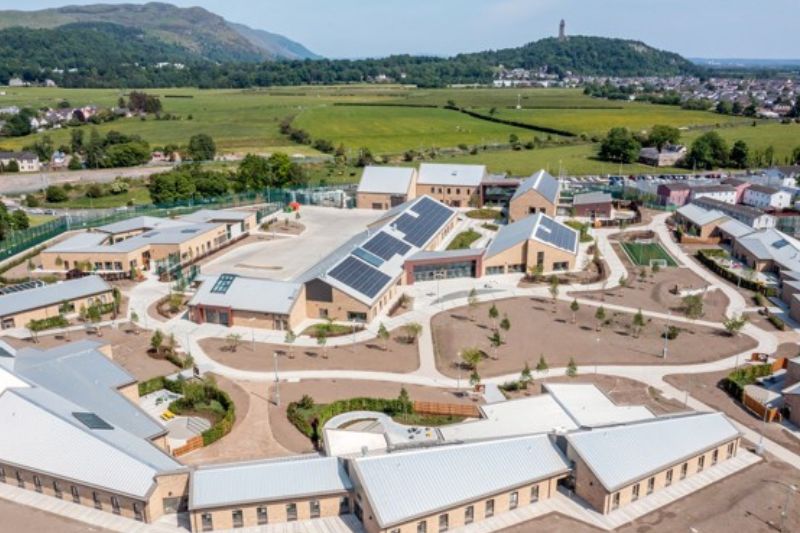
As far as prisons go, HMP Stirling is truly state-of-the-art.
Replacing HMP Cornton Vale, the facility pioneers a therapeutic approach for the 117 women it can hold in custody.
Developed at a cost of around £85m, the prison represents a fundamental rethink of how female offenders are housed in Scotland, placing wellbeing and recovery at the very heart of its design.
But it is the architecture that truly sets it apart.
“Most people’s perception of what a prison looks like is based on either Victorian design or prisons built maybe 40 or 50 years ago,” added Rob.
“They form most of the prison estate, but like anything that old, the reality is they are starting to show their age and certainly from a healthcare perspective, they probably aren’t as up to date as the Prison Service would like them to be.”
“But looking to the future of prisons, HMP Stirling will likely be the blueprint for what a UK prison will look like – certainly in terms of inmate safety and their wellbeing.”
The reality is that it currently looks like no other prison in the UK.
Bright and airy, the building embraces an “ambitious and radical” architectural vision which has already secured a string of accolades, including the RIAS Award for Innovation and the Royal Institute of British Architects National Award 2025.
But while the design is striking, safety remained the priority.
Inside a prison, even the smallest design detail can help prevent harm and, in some cases, save lives.
The growing need for design safety
Government statistics show prison deaths have risen year on year, with 401 recorded in 2024/25. Self-harm rates in both male and female prisons are also at their highest level since records began in 2004.
This means reduced-ligature products are no longer confined to NHS environments.
Polar NE has seen increasing demand as the need for robust, thoughtfully designed safety products expands beyond hospital wards and mental health units.
“Reduced-ligature windows and doors primarily exist to keep people safe, and in the most extreme cases, save lives,” said Rob.
“But a big benefit, that is perhaps sometimes underappreciated, is the amount of independence they provide to users.
“In the right setting, they allow people to control ventilation and natural light themselves, without compromising safety.