
In 2018, the NHS ambition to achieve zero suicides in mental health inpatient care challenged services to imagine something previously thought impossible: eliminating inpatient suicide entirely.
Programmes across the NHS, including Goal Zero initiatives, reflected a wider shift toward suicide prevention becoming embedded in systems, environments, and culture, rather than treated as an unavoidable reality of care.
Eight years later, the ambition remains. But so do the pressures facing frontline teams: fuller wards, rising patient acuity, exhausted staff, and systems stretched almost every day.
Against this backdrop, national scrutiny has intensified. In 2023, then Health Secretary Jeremy Hunt renewed calls for a “zero suicide ambition” across mental health services.
Whilst the ambition was, and remains, one we support, the mental health system was already under significant pressure in 2018. For many trusts, achieving the goals of programmes such as Goal Zero was always likely to require substantial systemic change, sustained investment, and a fundamental rethink of inpatient environments.
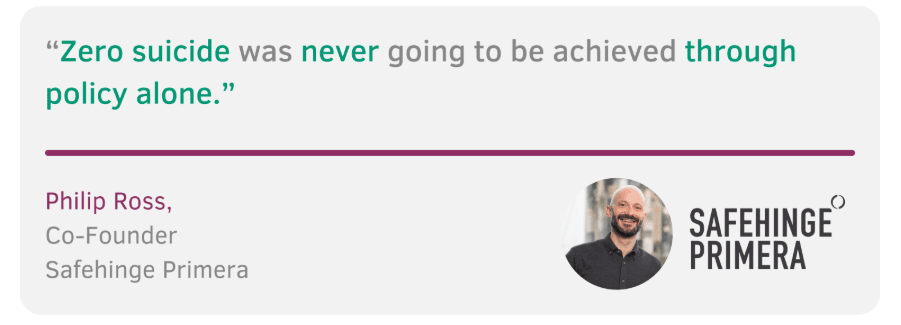
As Safehinge Primera Co-Founder Philip Ross reflected in 2018:
Now, in 2026, we revisit both the mental health landscape and the strategies intended to support suicide prevention across the NHS, reflecting on what has changed, where progress has been made, and the challenges that still remain.
Where are we now?
In 2018, we discussed how mental health was becoming increasingly prevalent within the UK healthcare system. In 2026, it would be fair to say mental health is now embedded across every layer of the NHS, with demand continuing to rise across inpatient, community, and crisis services.
When the NHS ambition of “Zero Suicide” gained momentum in 2018, mental health services were already operating under significant pressure. Inpatient suicides remained above 80 deaths per year, while concerns around staffing, workforce shortages, bed availability, and rising patient acuity were growing across NHS mental health care.
Eight years later, the ambition remains, but the operational landscape has become significantly more complex. NHS England now describes demand for mental health care as being at an “all-time high”.
The changing operational landscape since 2018
Sources: NHS England, CQC, The King’s Fund, Centre for Mental Health, The Guardian.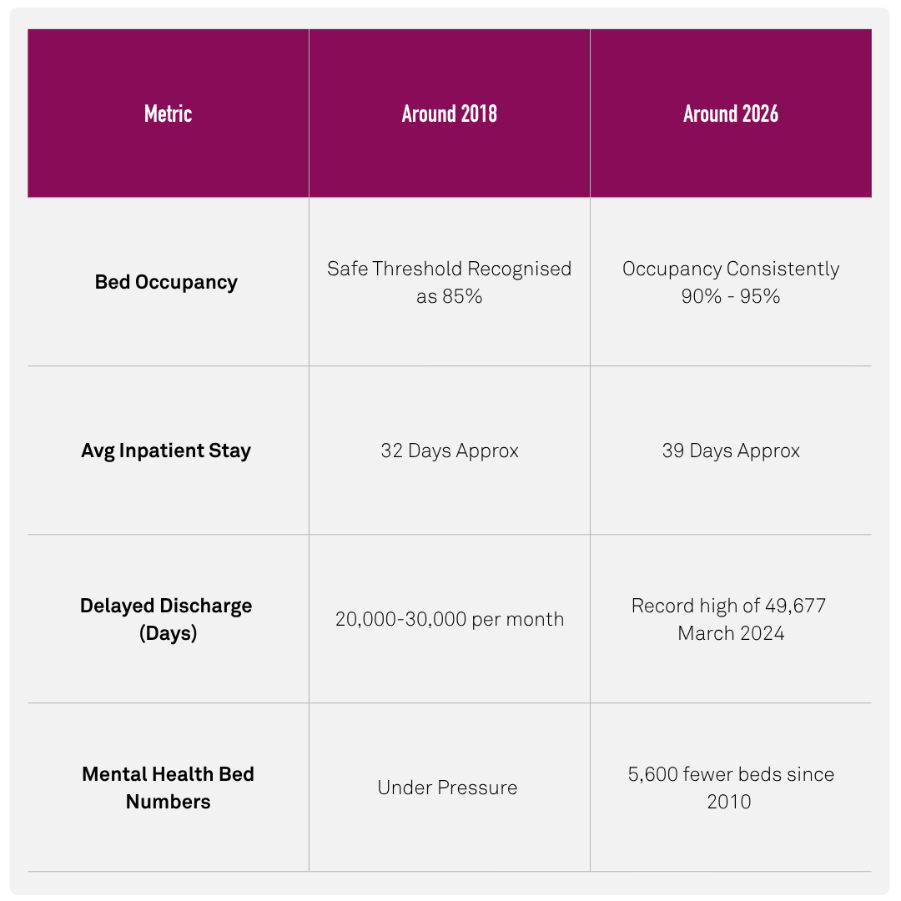
At the same time, the understanding of suicide prevention has evolved. In 2018, much of the discussion centred around observations, policy targets, and ligature reduction.
In 2026, the conversation increasingly includes workforce fatigue, delayed discharge, alarm fatigue, continuity of care, therapeutic environments, and how systems behave under sustained operational pressure. The quality and reliability of safety products has also become more relevant.
Has investment increased enough?
While mental health funding has increased since the inception of Goal Zero in 2018, pressure on services has continued to grow alongside it.
At the time, Mental Health Trust funding in England had reportedly fallen by £150m over four years.
Since then, the NHS Long Term Plan committed an additional £2.3bn annually to mental health services by 2023 to 2024, alongside investment into crisis care and community support.
However, providers continue to report that demand growth is outpacing workforce and operational capacity across many areas of the system.
Staffing pressures escalating
Workforce pressures have also evolved significantly since 2018. At the time, mental health nursing posts had reduced by 12%, while 6 in 10 mental health workers said they did not have enough time to provide proper care.
Today, vacancy rates in some inpatient mental health services remain around 14%, with sickness absence rates around 7%, continuing to place pressure on frontline teams and the consistency of care being delivered.
In addition, the operational burden placed on inpatient services has intensified. Bed occupancy regularly exceeds recommended safe levels, average inpatient stays have increased, and delayed discharge days reached a record 49,677 in March 2024.
The CQC has also warned that people are increasingly becoming more unwell before referral, meaning inpatient teams are often caring for more clinically complex patients for longer periods under sustained operational pressure.
Safer environments
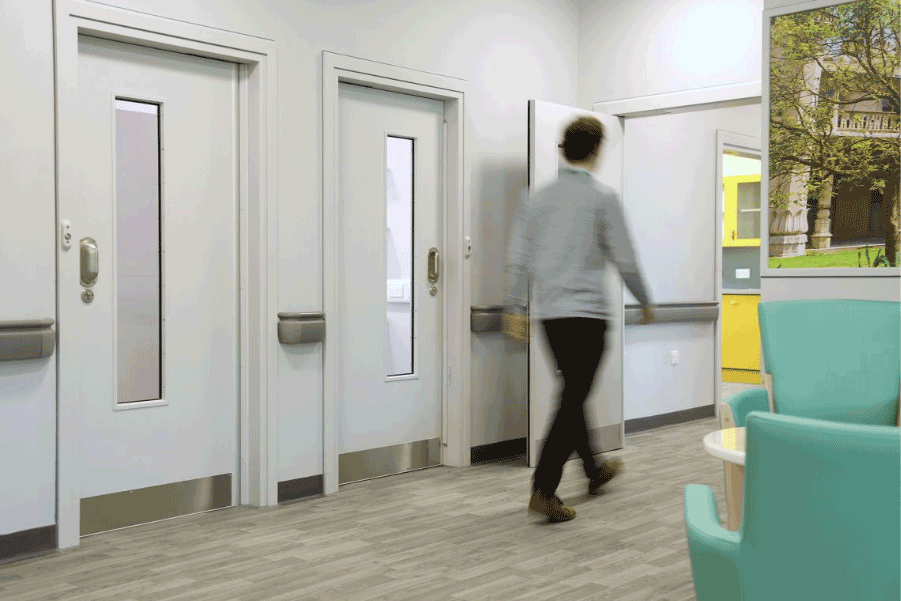
One area where the Goal Zero agenda has driven meaningful progress is the design of safer inpatient environments.
In 2018, much of the discussion around ligature reduction still focused on isolated interventions and removing obvious risks.
Since then, anti-ligature design has become far more embedded within mental health estates strategies, with growing recognition that the built environment plays a direct role in both patient safety and therapeutic recovery.
This shift in thinking reflects a broader move towards holistic inpatient environments that aim to create environments that support dignity, recovery, and de-escalation alongside safety.
Evidence from the Department of Health’s Design with People in Mind programme found that ward refurbishment and improved therapeutic design were associated with a 20% reduction in average length of stay and a 70% reduction in seclusion rates within inpatient mental health settings.
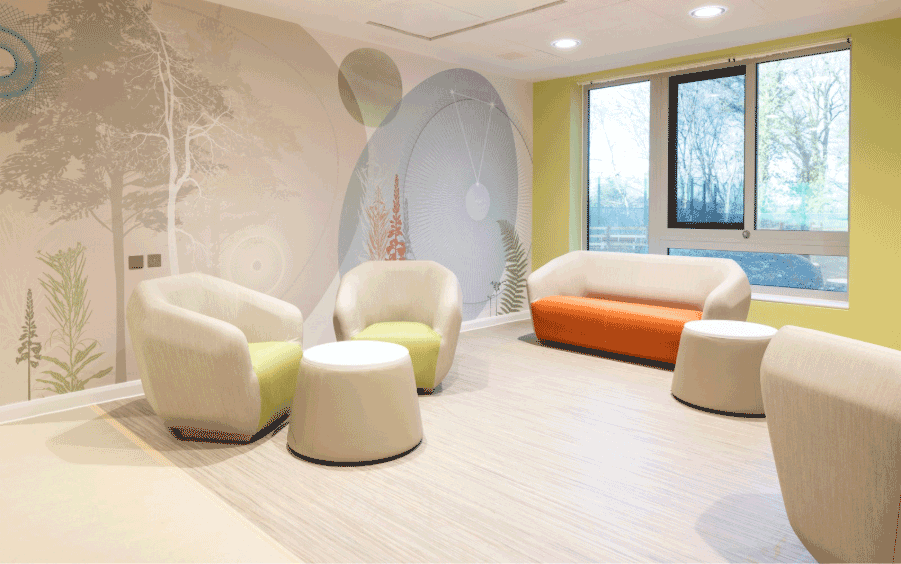
Silverwood, Surrey and Borders: Kate Bond
Even in light of this evidence, mental health providers continue to operate within ageing inpatient environments, with NHS Digital’s Estates Returns Information Collection (ERIC) data showing a maintenance backlog exceeding £1bn across Mental Health and Learning Disability Trust estates, highlighting the scale of refurbishment and modernisation work still required across the sector.
Safer environments matter. But they cannot compensate for exhausted systems indefinitely.
Improved monitoring
Monitoring technologies have also developed substantially since 2018. At the time, the focus centred heavily around supporting observations between routine checks and reducing the blind spots that existed during intermittent observations.
15-minute observations for 24 hours = 96 instances
96 times a shutter is opened, letting light into the room
96 times it is slammed down, causing service users to wake in fright
But what does that mean?
48 minutes observed.
23 hours and 12 minutes not observed.
Patients are directly observed for just over 3% of the day, yet the sound and disruption of traditional observation methods can shape much of the remaining experience.
Since 2018, greater emphasis has been placed on connected and responsive systems, including integrated ligature alarms, centralised alert management, and digital observations.
The focus is no longer simply on generating more alerts, but on creating systems staff can trust under sustained operational pressure, without contributing to alarm fatigue or unnecessary escalation.
So, was Goal Zero ever feasible?
If the ambition was to eliminate suicide within inpatient mental health settings, the reality in 2026 suggests the solution lay in more than just policy change.
As predicted by Philip Ross in our 2018 article on the same topic.
At that time, the goal was set against a backdrop of more than 80 inpatient suicides annually and around 6,000 suicides per year nationally.
Today, inpatient suicides have reduced, and national suicide figures have also fallen slightly. Progress has been made, but there is still much more to do.
Importantly, the ambition itself remains. The NHS 10 Year Health Plan continues to place suicide prevention, patient safety, earlier intervention, and safer therapeutic environments at the centre of long-term mental health improvement.
Viewed through that lens, focusing purely on whether the sector achieved a literal “zero” risks missing the wider impact Goal Zero and broader suicide prevention programmes have had across mental health care.
Over the last eight years, suicide prevention has become far more embedded in every aspect of ward design. Anti-ligature design, full-door alarm systems, trauma-informed environments, and earlier intervention approaches have all evolved significantly since 2018.
Perhaps most importantly, suicide is no longer viewed as an unavoidable consequence of mental illness, but as a systems challenge requiring continuous improvement across environments, staffing, technology, and therapeutic care.
What’s next?
Supporting frontline teams
The data throughout this review highlights a growing operational burden placed on clinical staff. Higher occupancy levels, longer stays, increasing patient acuity, and delayed discharges all continue to increase pressure on frontline teams.
Moving closer towards Goal Zero will require continued investment in staffing, alongside systems, products, and technologies designed to support earlier intervention, reduce operational strain, and improve safety for both service users and staff.
Investing in safer and more therapeutic environments
Evidence increasingly shows the positive impact safer and more therapeutic environments can have on recovery, de-escalation, and patient outcomes.
However, with NHS mental health estates still facing a maintenance backlog exceeding £1bn, significant refurbishment and retrofit work remains across many inpatient settings. Continued investment into anti-ligature upgrades, trauma-informed design, and modernised ward environments will remain critical.
Continuing innovation in safety and monitoring
Digital technologies and ligature reduction systems have evolved significantly since 2018, with advances in full-door alarms, integrated technologies, and digital, non-visual observation support helping reduce blind spots and support earlier intervention. The next challenge will be ensuring these solutions remain trusted, usable, and operationally effective.
The ambition of Goal Zero remains important. But moving closer to it will depend on whether frontline teams are given the time, environments, tools, and support needed to deliver safer and more compassionate care every day.
How can Safehinge Primera support Goal Zero
At Safehinge Primera, we work closely with clinicians, estates teams, experts by experience, and service users to deeply understand the realities of mental health care, listening carefully to the operational, emotional, and human challenges faced every day on wards across the country.
Through this co-design approach, we develop products and systems that support safer, more therapeutic environments in practice, not just on paper.
From full-door ligature alarm systems shaped by clinical feedback to anti-barricade doorsets designed for intuitive use under pressure, our focus remains on supporting dignity, reliability, and safer outcomes across mental health care.
References
-
NHS England. The NHS Long Term Plan. 2019.
https://www.longtermplan.nhs.uk/ -
NHS England. NHS Patient Safety Strategy. 2019.
https://www.england.nhs.uk/patient-safety/the-nhs-patient-safety-strategy/ -
Department of Health and Social Care. Suicide Prevention Strategy for England: 2023 to 2028. 2023.
https://www.gov.uk/government/publications/suicide-prevention-strategy-for-england-2023-to-2028 -
Office for National Statistics (ONS). Suicides in England and Wales.
https://www.ons.gov.uk/peoplepopulationandcommunity/birthsdeathsandmarriages/deaths -
Safehinge Primera. Zero Suicide: A Feasible Goal? 2018.
https://www.safehingeprimera.com/news/zero-suicide-a-feasible-goal/ -
World Health Organization. Global Patient Safety Action Plan 2021 to 2030.
https://www.who.int/teams/integrated-health-services/patient-safety/policy/global-patient-safety-action-plan -
NHS England. The NHS 10 Year Health Plan.
https://www.england.nhs.uk/long-read/fit-for-the-future-10-year-health-plan-for-england/


